Final 2025 supermoon illuminates the night sky
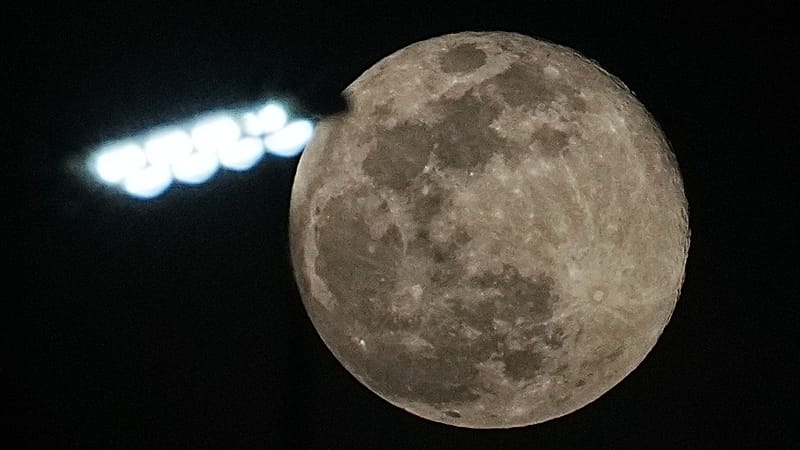
December’s supermoon, the last of three consecutive events in 2025, illuminated the night sky as the moon reached its closest point to Earth, appearing larger and brighter than usual.
The phenomenon produced vivid nighttime views captured in various locations, including Sarıkamış in Kars. Residents admired the bright lunar display, which briefly lit up the landscape. Supermoons occur in clusters when the moon passes through the closest part of its elliptical orbit, and this one marked the year’s final occurrence.
What is a Supermoon?
A supermoon is a term used to describe a full moon that occurs when the moon is at or near its closest point to Earth in its orbit. This event results in the moon appearing significantly larger and brighter in the sky compared to a typical full moon. The term "supermoon" was coined by astrologer Richard Nolle in 1979, though it has since gained popularity among astronomers and the general public alike.
Supermoons are not rare occurrences, but they do happen with some regularity. The moon’s orbit around Earth is elliptical, meaning it has a perigee (closest point) and an apogee (farthest point). When a full moon coincides with the perigee, it becomes a supermoon. These events often draw attention from both amateur stargazers and professional astronomers due to their visual impact and the opportunities they provide for observation and photography.
How Often Do Supermoons Occur?
Supermoons typically occur several times a year, with the frequency depending on the alignment of the moon’s orbit with Earth’s position relative to the sun. In some years, there can be as many as four or five supermoons, while in others, there may be fewer. However, the occurrence of multiple supermoons in quick succession—such as three in a row—is less common and tends to generate more public interest.
In 2025, three supermoons were observed, with the final one taking place in December. This particular event was notable not only for its visual appeal but also for being the last of the year’s series. The timing of these events is determined by the moon’s orbital mechanics, which are influenced by gravitational forces from the Earth and the sun.
Observing the Supermoon
For those interested in observing a supermoon, clear skies and minimal light pollution are ideal conditions. Many people choose to view the event from rural areas or high elevations where the atmosphere is thinner and less affected by artificial lighting. Photography enthusiasts often take advantage of the opportunity to capture the moon’s enlarged appearance against the backdrop of the night sky.
In regions like Sarıkamış in Kars, the supermoon provided a striking visual spectacle, with the bright moon casting a soft glow over the landscape. Such moments remind people of the beauty and wonder of celestial events, offering a chance to pause and appreciate the natural world.
The Science Behind the Supermoon
From a scientific perspective, a supermoon is more than just a visually impressive event. It provides researchers with an opportunity to study the moon’s surface and its interactions with Earth’s gravity. While the difference in size and brightness between a supermoon and a regular full moon may seem dramatic, it is actually relatively small—about 7% larger and 15% brighter.
Despite this, the supermoon remains a popular subject for discussion and observation. Its visibility and accessibility make it a great way for people to engage with astronomy and learn more about the solar system. Whether viewed through a telescope or simply with the naked eye, a supermoon offers a unique and memorable experience.
Conclusion
The December supermoon of 2025 was a fitting end to a year of astronomical wonders. As the moon reached its closest point to Earth, it offered a breathtaking display that captivated observers around the world. From the scientific significance of the event to the aesthetic appeal of the glowing night sky, the supermoon serves as a reminder of the dynamic and ever-changing nature of our universe.


Comments
Post a Comment