IEA Endorses SMR Complex for South Korea
International Energy Agency Recommends South Korea Develop SMR Industrial Complex
The International Energy Agency (IEA) has proposed that South Korea create a national industrial complex focused on the development and application of small modular reactors (SMRs). This recommendation is part of a broader set of 10 energy policy suggestions outlined in a report published last month. The initiative aims to position South Korea as a leader in next-generation nuclear technology.
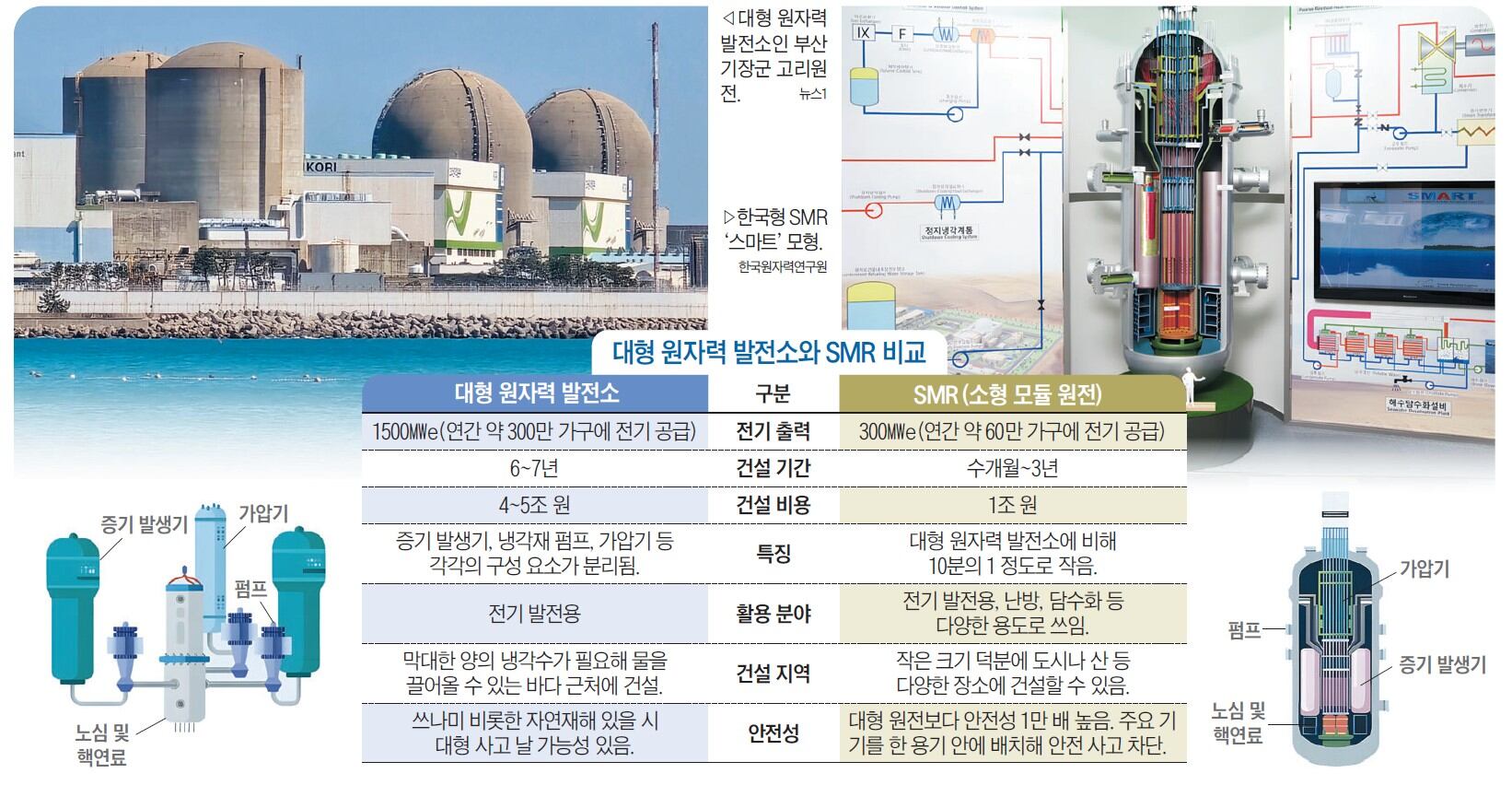
SMRs are compact nuclear reactors with an output of approximately 300 megawatts. Unlike traditional large-scale nuclear plants, which typically generate between 1,000 and 1,400 megawatts, SMRs integrate major components such as the reactor core and steam generator into a single unit. This design makes them more flexible and potentially easier to deploy in various settings. According to the IEA, SMRs have an accident probability of once every billion years, and even in the event of an incident, the damage would be limited. These features have led to their characterization as "next-generation nuclear reactors." However, they have not yet reached commercialization.
The IEA emphasized that South Korea has a highly skilled workforce in the nuclear sector and is strengthening its position in the global market. It recommended that the country leverage its existing knowledge, technology, and manufacturing capabilities to build and demonstrate SMRs within a national industrial complex. The agency believes this approach could help South Korea establish itself as a key player in the future of nuclear energy.
One of the potential applications highlighted by the IEA is the use of SMRs for hydrogen production. The agency stated that producing hydrogen through nuclear power could position South Korea as a leading nation in this emerging industry. This aligns with global efforts to reduce carbon emissions and transition toward cleaner energy sources.
According to the 11th Basic Plan for Electricity Supply and Demand, finalized earlier this year under the Yoon Suk-yeol administration, the government plans to construct one SMR consisting of four modules by 2035. The Lee Jae-myung administration is currently working on the 12th Electricity Plan, which focuses on phasing out coal and expanding renewable energy. Despite these shifts, the government has indicated that it intends to continue the SMR plans established in the 11th plan.
Minister of Climate, Energy and Environment Kim Sung-whan recently addressed the progress of SMR development during a press briefing. He outlined the following timeline: completing the design by 2028, obtaining permits by 2030, beginning installation after 2030, and starting power generation by 2035. While he acknowledged that the schedule may change, he emphasized the importance of the experimental phase.
However, the current government remains uncertain about constructing two new large-scale nuclear reactors included in the 11th Electricity Plan. It has stated that the decision will undergo a public deliberation process. This ambiguity has drawn criticism from the nuclear industry, which argues that the government's focus on SMRs—still in early technological development—is a way to avoid backlash over its nuclear phase-out policy.
Despite these challenges, the IEA’s recommendations highlight the potential of SMRs to play a significant role in South Korea’s energy future. By creating a dedicated industrial complex, the country could accelerate the development and deployment of this innovative technology, positioning itself at the forefront of the global nuclear energy landscape.


Comments
Post a Comment