Is Life Out There? NASA Discovers Key Sugars on Ancient Asteroid Bennu
How life began on Earth is one of the most profound mysteries in science. Recent discoveries by NASA have brought scientists closer to understanding this enigma. The US space agency has identified essential sugars on Bennu, an ancient asteroid located 200 million miles from Earth. Among the findings are ribose, a five-carbon sugar, and glucose, a six-carbon sugar. This marks the first time such sugars have been detected in an extraterrestrial sample.
The research, led by a team at Tohoku University in Japan, clarifies that these sugars are not proof of alien life. Instead, they could offer critical insights into the origins of life on our planet. According to the team, while these sugars do not indicate the presence of life, their detection, along with amino acids, nucleobases, and carboxylic acids in Bennu samples, suggests that the building blocks of biological molecules were widespread throughout the solar system.
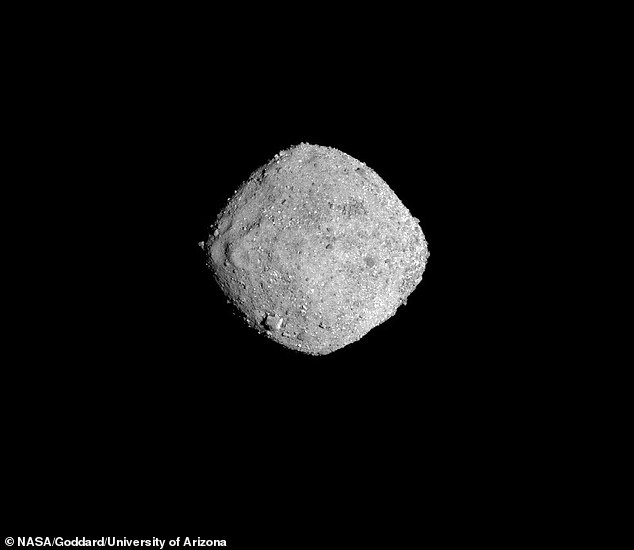
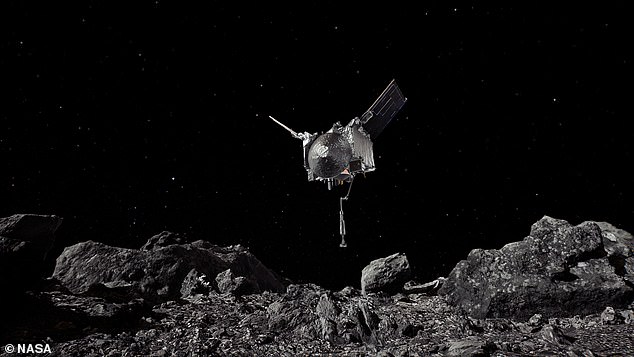
Bennu is an asteroid composed of rocks that date back nearly 4.6 billion years. It passes close to Earth every six years, coming within 186,000 miles of our planet. In 2020, NASA's OSIRIS–REx mission took advantage of a close flyby to collect samples from Bennu, which were returned to Earth on 24 September 2023. Since then, scientists have been analyzing these samples to gain a deeper understanding of the conditions in our solar system billions of years ago.
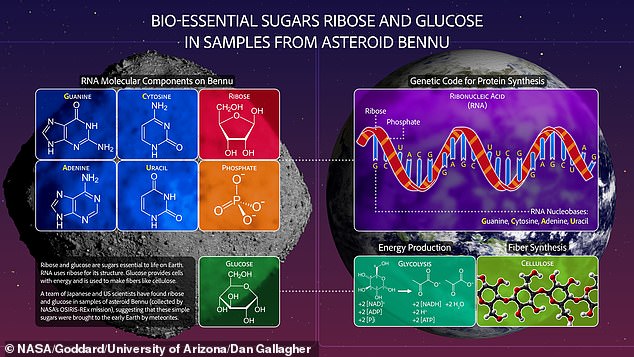
In the latest study, the Tohoku University team aimed to determine whether Bennu contains the fundamental building blocks of life. On Earth, ribose is a key component of RNA, while deoxyribose is part of DNA. RNA plays crucial roles in cellular functions, and DNA serves as the primary carrier of genetic information.
"Alongside the five nucleobases used to construct DNA and RNA, phosphates have also been found in the Bennu samples," said Dr Yoshihiro Furukawa, who led the new study. "This discovery of ribose means that all the components needed to form RNA are present in Bennu."
Asteroid Bennu
- Size: 500 metres wide
- Age: Formed from rocks dating back 4.5 billion years
- Orbit and rotation: Makes one orbit around the sun every 1.2 years, and one full rotation every 4.3 hours
- Formation: Likely formed in the Main Asteroid Belt between Mars and Jupiter
This is not the first time ribose has been found on an extraterrestrial object. Previously, it was discovered in two meteorites that fell to Earth. However, the Bennu sample is unique because deoxyribose, the building block of DNA, was not detected. The researchers suggest that this may indicate ribose was more common than deoxyribose in early solar system environments.
The findings support the "RNA world" hypothesis, which proposes that the earliest forms of life relied on RNA as the primary molecule for storing information and driving chemical reactions. "Modern life is based on a complex system organized primarily by three types of functional biopolymers: DNA, RNA, and proteins," explained Dr Furukawa. "However, early life may have been simpler."
In addition to ribose, the team also found evidence of glucose on Bennu. This marks the first indication that a vital energy source for life as we know it was present in the early solar system.
While Bennu offers valuable clues about the origins of life on Earth, it also poses a potential threat. A recent study estimated a one-in-2,700 chance of a collision with Earth in September 2182.
What other secrets might Bennu hold? Could its ancient stardust reveal the tumultuous beginnings of our Solar System? And what other discoveries might lie hidden in the samples collected from this asteroid? As scientists continue to analyze Bennu’s contents, the answers to these questions may reshape our understanding of life’s origins.


Comments
Post a Comment