Jamie Dimon's Bold AI Warning: The Skills Workers Must Master
Jamie Dimon's Warning on AI and the Future of Work
Jamie Dimon, CEO of JPMorgan Chase, has issued a cautionary message about the impact of artificial intelligence (AI) on the workforce. However, his advice to workers is not one of panic but rather a call for adaptability and the development of uniquely human skills.
In an interview on Fox News, Dimon acknowledged that AI will eliminate certain jobs. Yet, he emphasized that this does not mean people will be left without employment. Instead, he urged individuals to focus on critical thinking, learning new skills, and improving communication abilities. "You'll have plenty of jobs," he said, highlighting the importance of these competencies in an AI-driven world.
Dimon’s comments come as AI transitions from science fiction to a tangible reality for millions of workers. Across corporate America, executives are increasingly open about the disruptions AI is causing, particularly among younger and white-collar employees. Some labor experts suggest that AI is already contributing to a rise in unemployment among young workers.
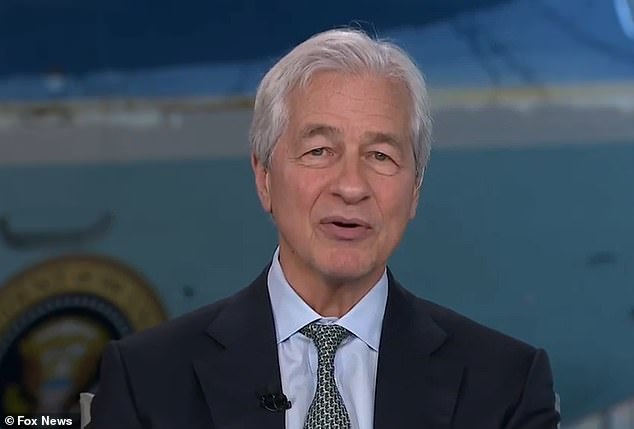
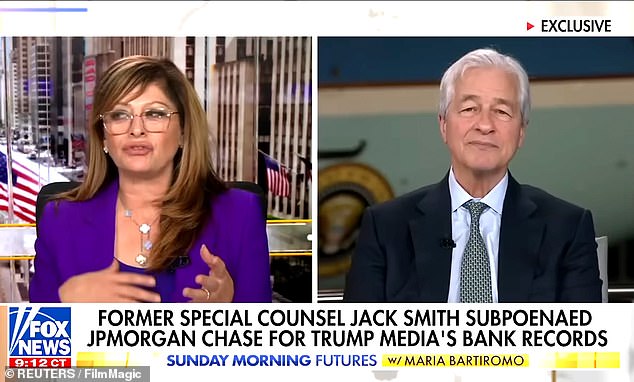
Despite these concerns, Dimon pushed back against the notion that AI is currently responsible for widespread job losses. He argued that the current softer labor market is more a result of business caution than technological change. "Jobs have gotten a little weaker, wages have gotten a little weaker," he explained. "Businesses are going to be a little more cautious hiring. That's not because of AI, that's just because they want to do more with less."
While acknowledging that AI will eventually displace some workers, Dimon rejected predictions of a sudden collapse in employment. He described AI as a long-term force for progress, comparing its potential to historical innovations like tractors, fertilizers, and vaccines. "For the most part, AI's going to do great things for mankind," he said.
However, Dimon also warned that proper governance is essential. "Now, of course it needs to be properly regulated," he said. "There are downsides just like there are to airplanes, pharmaceuticals, cars. All things get used by bad people."
Even with regulatory safeguards, Dimon recognized that job displacement is inevitable. "But it will eliminate jobs," he said. "That doesn't mean that people won't have other jobs." He emphasized that the pace of change, rather than the technology itself, poses the greatest risk. "If it does happen too fast for society, which is possible, you know, we can't assimilate all these people that quickly," he added.
Dimon compared the transition to past economic upheavals caused by farming automation, electricity, and the internet. "This may be a little bit longer, and it'll be a little harder to assimilate people," he said. He called for governments and companies to learn from past mistakes and manage the transition more deliberately. "You can retrain people, relocate people, income assistance, early retirement," he suggested.
In the near term, Dimon predicted that AI-driven investment could actually increase employment. "You have a huge amount of construction that needs to take place," he said. "You need roads and trucks and drivers. You need servers, you need fire — all of that." He added, "So it's going to cause probably more jobs in the short run in total."


In May, Anthropic CEO Dario Amodei issued one of the starkest predictions yet, warning that AI could erase up to half of all white-collar jobs over the next five years. Other corporate leaders are also bracing for sweeping change. Walmart CEO Doug McMillon told The Wall Street Journal that AI is set to change literally every job. "Maybe there's a job in the world that AI won't change, but I haven't thought of it," he said.
Dimon has long argued that leadership and long-term career success depend more on skills that aren't easily coded. In July 2024, he emphasized the importance of judgment, curiosity, and self-awareness while speaking on LinkedIn's This Is Working video series. "If you don't have an accurate assessment of the real world out there, what's changing, what the ideas are, you will eventually fail," he said.
That belief underpins his latest warning: in an AI-saturated workplace, workers who can think critically, communicate clearly, and read the room may become more valuable, not less. While AI excels at administrative and task-based work, studies show it still struggles with nuanced judgment, ethical reasoning, and contextual decision-making—precisely the areas where human workers can differentiate themselves.
Workers seen as strong communicators are often more trusted, more influential, and more likely to advance. Harvard University associate professor Alison Wood Brooks says many people underestimate what real listening looks like in the workplace. "Successful conversationalists and successful employees go a step further" than basic eye contact or nodding, she told CNBC. "Listening to somebody's answer then probing for more information is a superhero move, and a shockingly low number of people think to do it," she said. "You should show [you're listening] by saying [you are] out loud."
As AI continues to reshape the workforce, the challenge lies in adapting to these changes while leveraging the unique strengths that humans bring to the table.


Comments
Post a Comment