Metaverse Mania: A Fleeting Trend
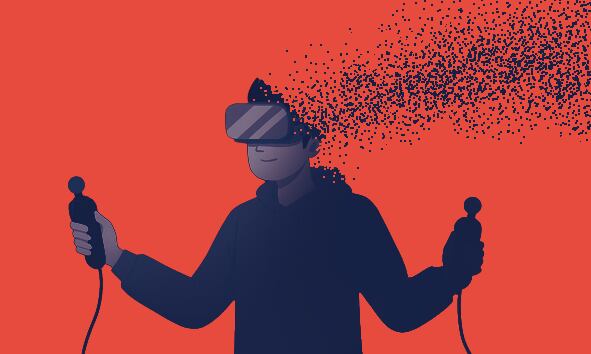
The Concept of the Metaverse
The term "metaverse," which first appeared in Neal Stephenson’s 1992 novel Snow Crash, refers to a "digital universe (Universe) that transcends reality (Meta)." It is a utopia where anyone can become a hero or a billionaire simply by wearing goggles. This science-fiction concept gained attention due to the COVID-19 pandemic. As non-face-to-face interactions became the norm, money poured into the metaverse worldwide. Microsoft acquired the game company Blizzard for 80 trillion Korean won, and Disney established a "metaverse business division," announcing plans to move its theme parks into the virtual realm. It seemed like the age of a "digital Columbus" had begun.
The Metaverse Frenzy
The metaverse craze was akin to a frenzy. Investments worth tens of trillions of won flowed in simply because companies claimed to be in the metaverse business, even without viable revenue models, and stock prices soared tens of times. People bought and sold virtual real estate for real money, and some metaverses even allowed trading of land on the Moon and Mars. The peak of this frenzy was when Mark Zuckerberg changed the company’s name from "Facebook" to "Meta," vowing to restructure all operations around the metaverse.
The Downfall of Meta
Four years later, Meta’s report card was disastrous. During this period, it suffered operating losses of $70 billion (approximately 103 trillion Korean won). The public mocked, "If it’s fun, it’s a game; if it’s not, it’s the metaverse." The limitations of heavy, dizzying headsets and goggles, along with crude avatars, were to blame. Ultimately, Meta slashed its metaverse-related budget by 30% next year and began restructuring.
Lessons from the Metaverse Failure
If writing a "metaverse failure report," the first line would be: "Expectations outpaced the technology." The definition was vague, and the content was lacking. Initially, it attracted money through NFTs (non-fungible tokens) and virtual real estate, but it failed to answer the question, "What can you actually do there?" Meanwhile, global interest shifted to ChatGPT and AI, which seemed poised to surpass humans. The metaverse has not yet been declared dead. Just as Amazon and Google survived the dot-com bubble of the early 2000s and transformed the world, groundbreaking technology might still be emerging. This is why Meta, despite scaling back its business, refuses to abandon augmented reality (AR) smart glasses.
The Long Road to Realization
It took over 400 years—from Leonardo da Vinci’s designs to the Wright brothers’ airplane—for the dream of human flight to materialize. Artificial intelligence, once ridiculed as impossible for decades, is now engulfing the world. Difficulty does not always justify giving up. The metaverse has dropped anchor and paused, not because the technology has failed, but because it has not yet reached human expectations. It is a cold warning from the market: seeds cannot be sown in winter.


Comments
Post a Comment