Samsung GDDR7 Drives AI, Wins Presidential Honor
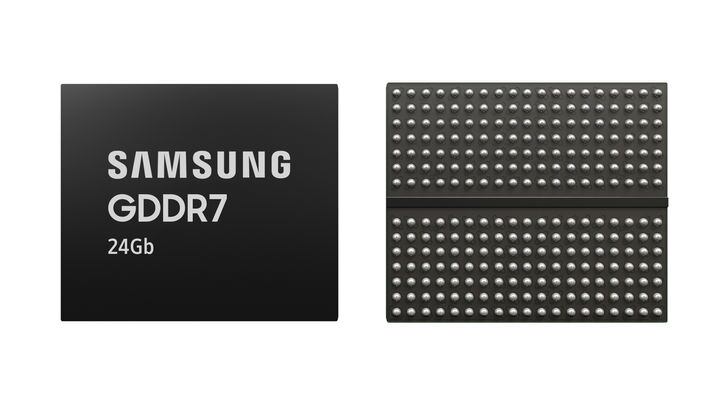
Samsung's GDDR7: A Game-Changer for the Semiconductor Industry
Samsung Electronics has made significant strides in the semiconductor industry with its latest innovation, the GDDR7. This advanced graphics DRAM is playing a pivotal role in boosting the company’s semiconductor business, particularly in the realm of AI accelerators. As the demand for high-performance computing continues to rise, GDDR7 is proving to be a crucial component in meeting these needs.
GDDR, or Graphics Double Data Rate, is a specialized type of DRAM designed for graphics processing. It excels in handling large volumes of data quickly, making it ideal for tasks such as gaming, 3D rendering, and artificial intelligence (AI). By enabling GPUs to access required data rapidly, GDDR supports the efficient operation of these powerful processors. With its high power efficiency and speed, GDDR7 is being hailed as a next-generation DRAM optimized for AI computations alongside GPUs.
Samsung's Leadership in GDDR Technology
Samsung has solidified its position as a market leader in the GDDR sector. The company developed the industry’s fastest GDDR6 DRAM in July 2022, followed by the launch of GDDR7 in July 2023. In October of the previous year, Samsung made history by developing the first 24Gb (gigabit) GDDR7 DRAM. This achievement was recognized at the ‘2025 Korea Tech Festival,’ held from the 3rd to the 5th in Seoul at COEX, where Samsung’s world-first 12-nanometer-class 40Gbps 24Gb GDDR7 DRAM received the Presidential Commendation at the 2025 Korea Technology Awards. This marked the company’s 11th Presidential Award, a record for a single company.
The Rising Importance of GDDR7
The recent attention on GDDR7 is driven by its potential to partially replace HBM (high-bandwidth memory). NVIDIA, a major player in the GPU market, announced in September that it would equip its Rubin CPX, an inference-dedicated GPU, with 128GB of GDDR7. The company plans to use HBM for high-computation tasks and GDDR7 for low-computation, high-speed needs. This strategic move has prompted other companies to explore ways to enhance inference performance by integrating GDDR7 into their systems.
Market research firm TrendForce predicts that demand for GDDR7 will surge alongside increased GPU demand in edge AI and diverse AI applications. Kim Dong-won, a researcher at KB Securities, noted that NVIDIA recently requested a significant expansion of GDDR7 supply from Samsung Electronics. This request is expected to more than double production capacity at the Pyeongtaek line. Given that GDDR7 commands a price premium, it is anticipated to drive profitability improvements in the DRAM business going forward.
Future Prospects and Market Impact
As the demand for AI and high-performance computing continues to grow, the role of GDDR7 is set to become even more critical. Its ability to handle large data volumes efficiently makes it an attractive option for various industries, including gaming, automotive, and healthcare. With Samsung leading the charge in GDDR technology, the company is well-positioned to capitalize on this growing market.
The integration of GDDR7 into next-generation GPUs and AI systems highlights its potential to revolutionize how data is processed and managed. As more companies adopt this technology, we can expect to see significant advancements in performance, efficiency, and scalability across multiple sectors. The future of GDDR7 looks promising, with Samsung at the forefront of this technological evolution.


Comments
Post a Comment