The Story Behind Hong Kong's Iconic Christmas Decorations
A Legacy of Light and Tradition
One of the city's most prolific festive light designers recalls his career spent illuminating the Hong Kong skyline. It was December 1990, and he was four years old. Hong Kong then got much colder than it does today, but standing to his mother's right as they took in the Christmas lights, his younger brother to her left, the cold seemed to melt away. Wide-eyed and clutching his mother's hand, he gazed upon the illuminated towers and parapets of a snow-white castle. Angels perched on the battlements, haloes aglow. Fairy lights festooned the winter scene on the waterfront by Harbour City, in Tsim Sha Tsui.
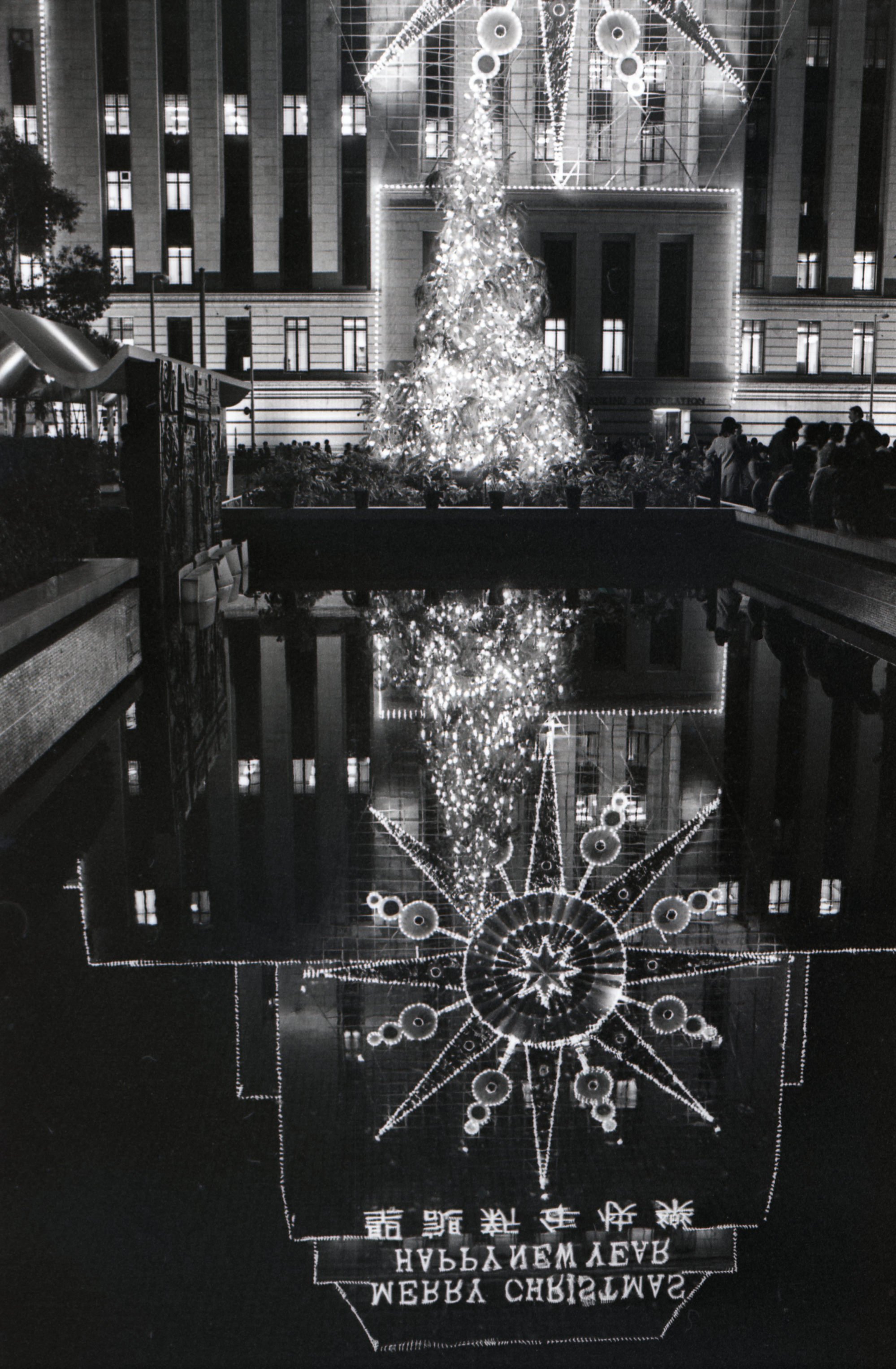
Hong Kong's ascent was written in Christmas lights. Mirroring the emergence of a booming economy and a burgeoning middle class, the annual citywide illuminations have marked a tradition for many families in the former British colony since the 1950s. Our own family's ritual had begun in the 60s, when my mother, Clara Chung Lo-ling, was brought by her father to see the lights in Central. Her voice still trails off in a reverie when she recalls the excitement of the occasion. "Everyone was happy and turned out in their best clothes," she says. "It was beautiful."
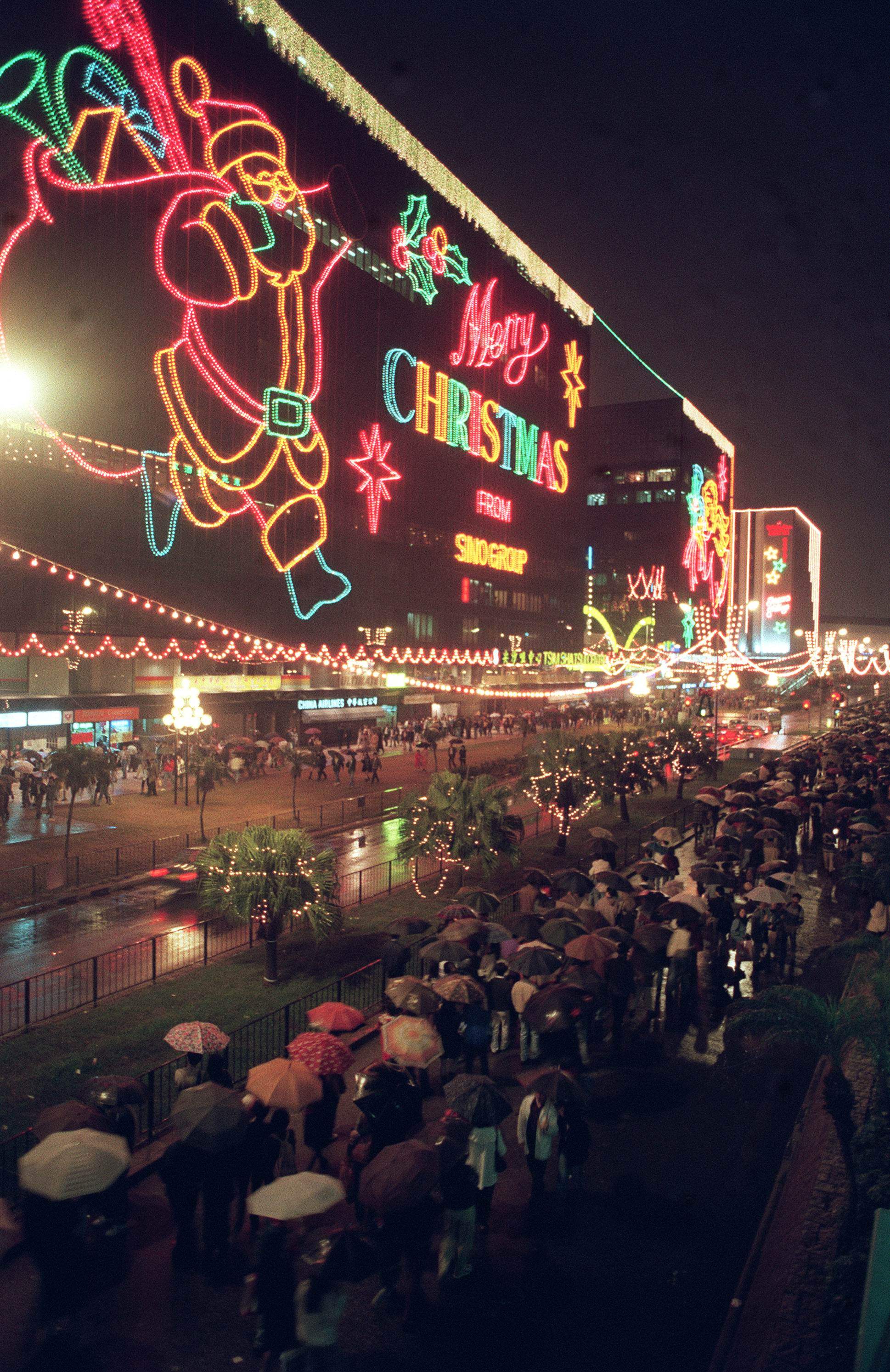
My mother carried these memories and traditions with her, growing up alongside Hong Kong as it flourished from a manufacturing hub to a financial powerhouse. She herself would become part of that meteoric rise, joining the property sector just as Victorian buildings were giving way to the first skyscrapers.
In Hong Kong, traditions are often intertwined with commerce, and the property sector has always been behind the Christmas lights that shine so vividly in the city's consciousness. While the displays would capture the attention of the city, those responsible for designing and building them often operated unseen by the public.
Among the most prolific of these lighting designers was Ko Cham-yuk. Born in 1951, Ko remembers observing the installation of elaborately hand-painted cinema billboards as a child. Until the mid-90s, these were the norm in Hong Kong, the deft brushstrokes of talented tradesmen capturing the magic in an actor's eyes and freeze-framing the high-flying kicks of kung fu heroes - works of art befitting the glamour of a trip to the movies. Ko, spellbound, set his heart on joining those artists.
At the time, Ko was working as a washing machine and air-conditioning repairman, but began his set design career in earnest in the late 60s with an apprenticeship at Peacock, one of only a few companies that did such work. He toiled under the gaze of his master, Lau Wai-tong, who is still well known today for having designed the iconic poster for the Hong Kong release of Bruce Lee's 1973 film Enter the Dragon.
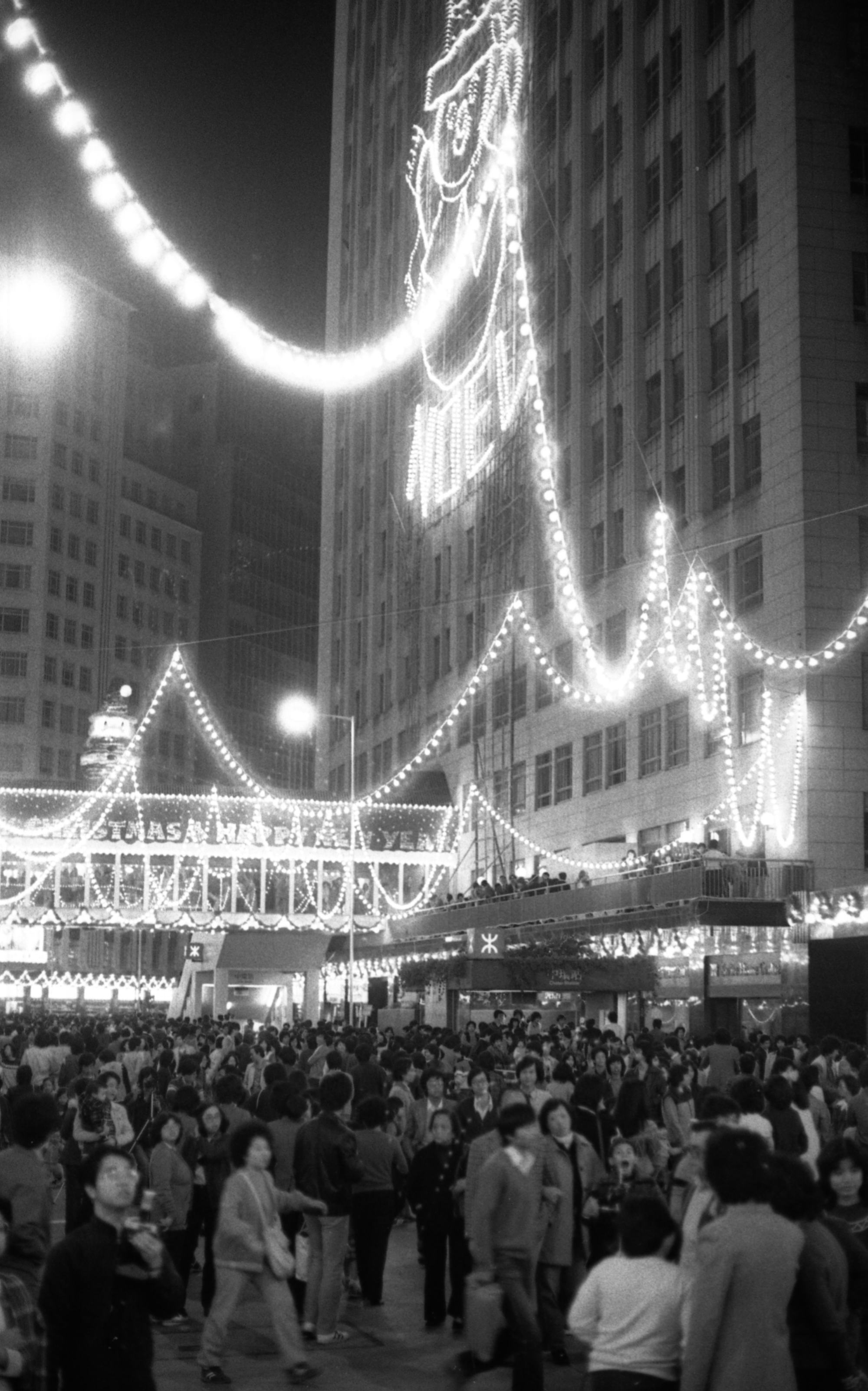
Throughout the 60s and 70s, Central formed the natural heart of Hong Kong's Christmas celebrations, but, in 1981, revellers who had come to admire the lights on Chater Road turned violent when a car hit a pedestrian on the packed thoroughfare. The ensuing Christmas riots saw vehicles overturned and set ablaze, prompting authorities to curtail large-scale Christmas displays in the city centre.
Nevertheless, it was around this time that "Hong Kong's economy really started taking off", recalls Ko. With government backing, the newly reclaimed land of East Tsim Sha Tsui became the epicentre of Christmas cheer, and Sino Land, the developer most associated with the master-planned district, reaped most of the benefit.
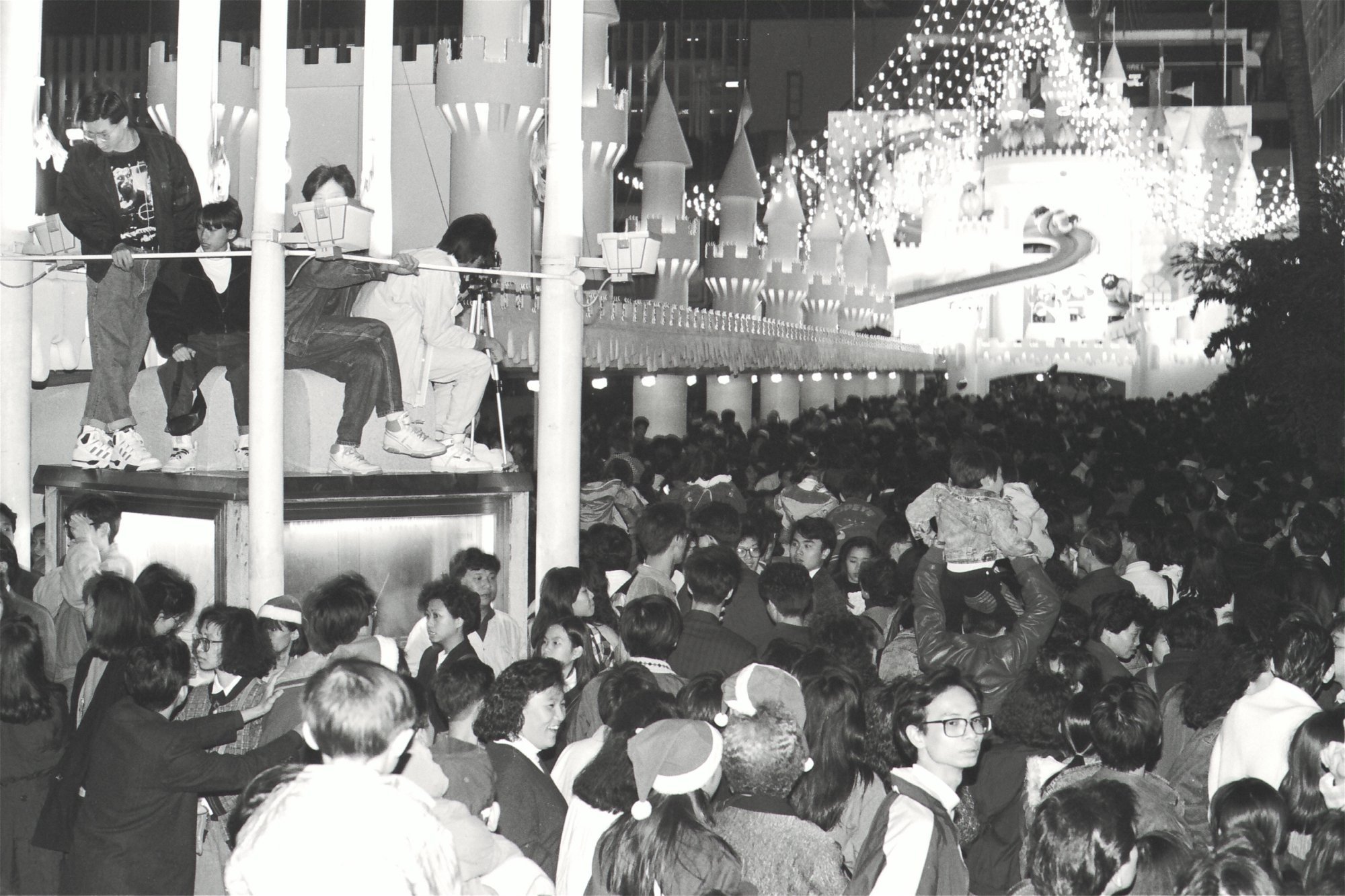
Ko's first Christmas display appeared in the early 80s at Harbour City. It was one of Hong Kong's first moving displays - if not the first - and featured rows of polyfoam angels holding hymnals and singing, bedecked with lights and moving left and right. "It was very simple for me," says Ko. "I told [Harbour City] that I could do it, no problem. I threw it in almost as a freebie. After I did that the first time, moving installations became the standard."
In this first display, Ko brought his early experiences in electronics to bear. "It's the exact same arrangement that allows a washing machine to function in stages," he says. "First it lets in the water, then it spins. One switch closes and another opens. That's how I understood it."
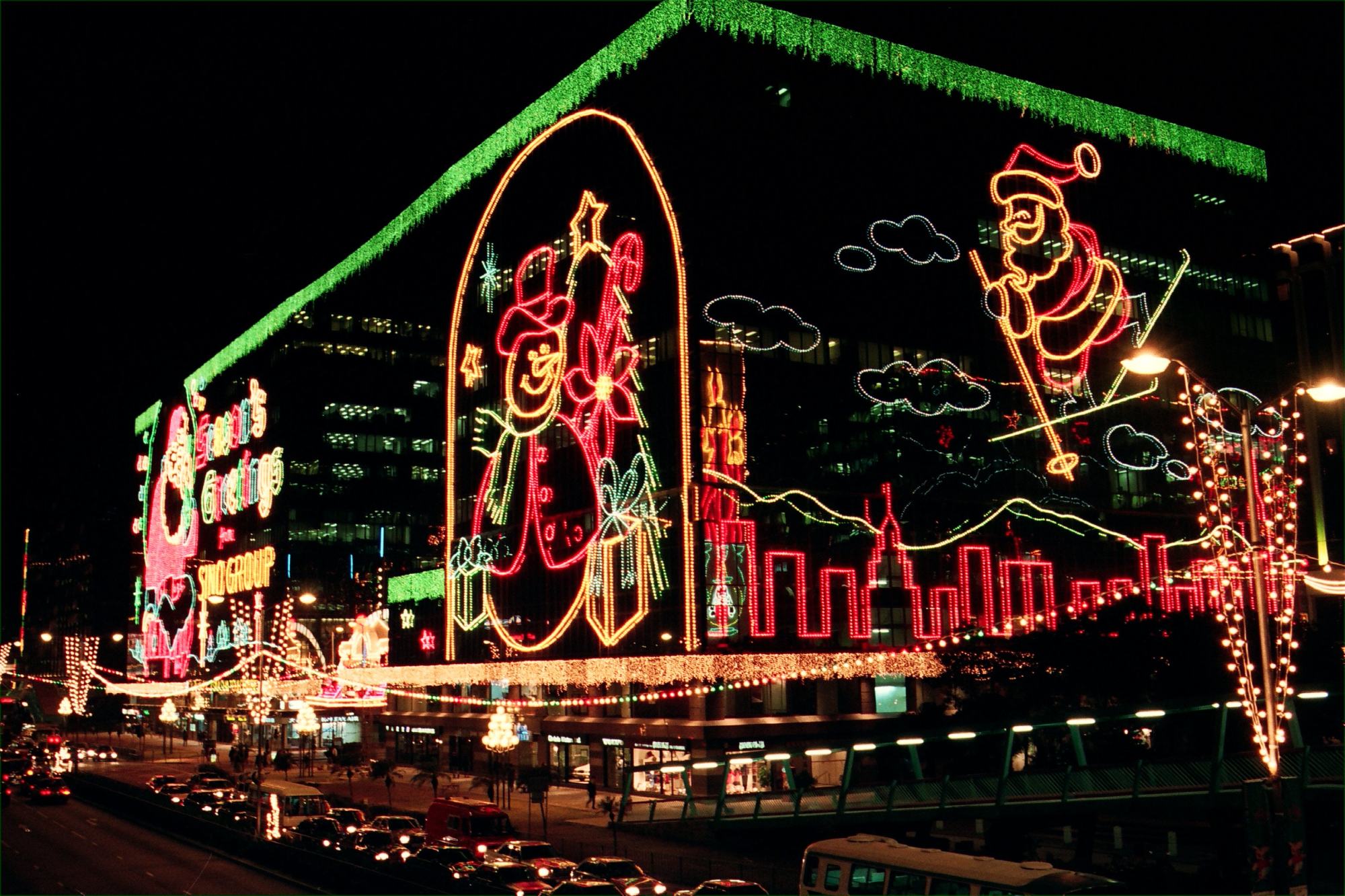
Ko moved on from that experience to creating displays that grew more exuberant with each passing year. Still, the one that stands out the most to Ko was a suspended design between Miramar Shopping Centre and Miramar Tower on Carnarvon Road in Tsim Sha Tsui. Installation called for a large metal frame with an intricate arrangement of six one-inch-thick cables anchored between it and the pedestrian walkway beneath. On this precarious assemblage, Ko's team built a bamboo scaffold and worked for an entire week.
"It had never been done before," says Ko of the technical complexity. "After removing the scaffolding, the lights, fixed to a wire mesh, looked like they were floating in mid-air."
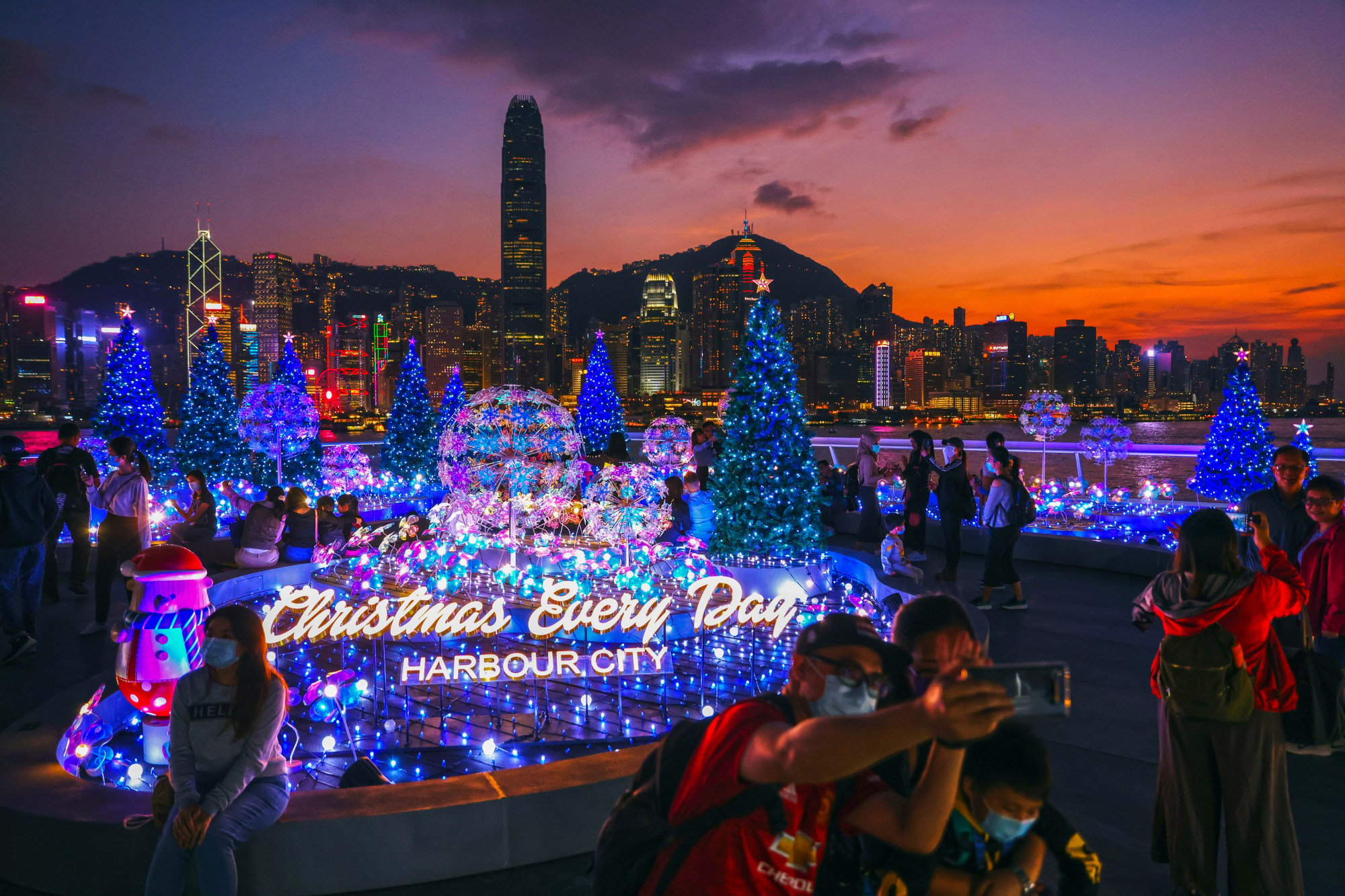
Each year, Ko would only have the capacity for one or two Christmas projects. "It would have been impossible to do more," he says. "You would do one for Harbour City and another for Sun Hung Kai and you'd already be pressed for time, as these displays needed to be ready simultaneously." In the busiest of seasons, he would have to complete entire displays in a single night.
Ko, who retired in 2000 and now lives in San Francisco, in the United States, still looks back with fondness on his early production work, which coincided with the heyday of Hong Kong's Christmas decorations, when they could draw crowds of up to half a million. The tradition may have faded among a glut of modern entertainment alternatives, but in the aftermath of the isolating years of the Covid-19 pandemic, there is a new appreciation for the warmth and togetherness that the lights evoke.
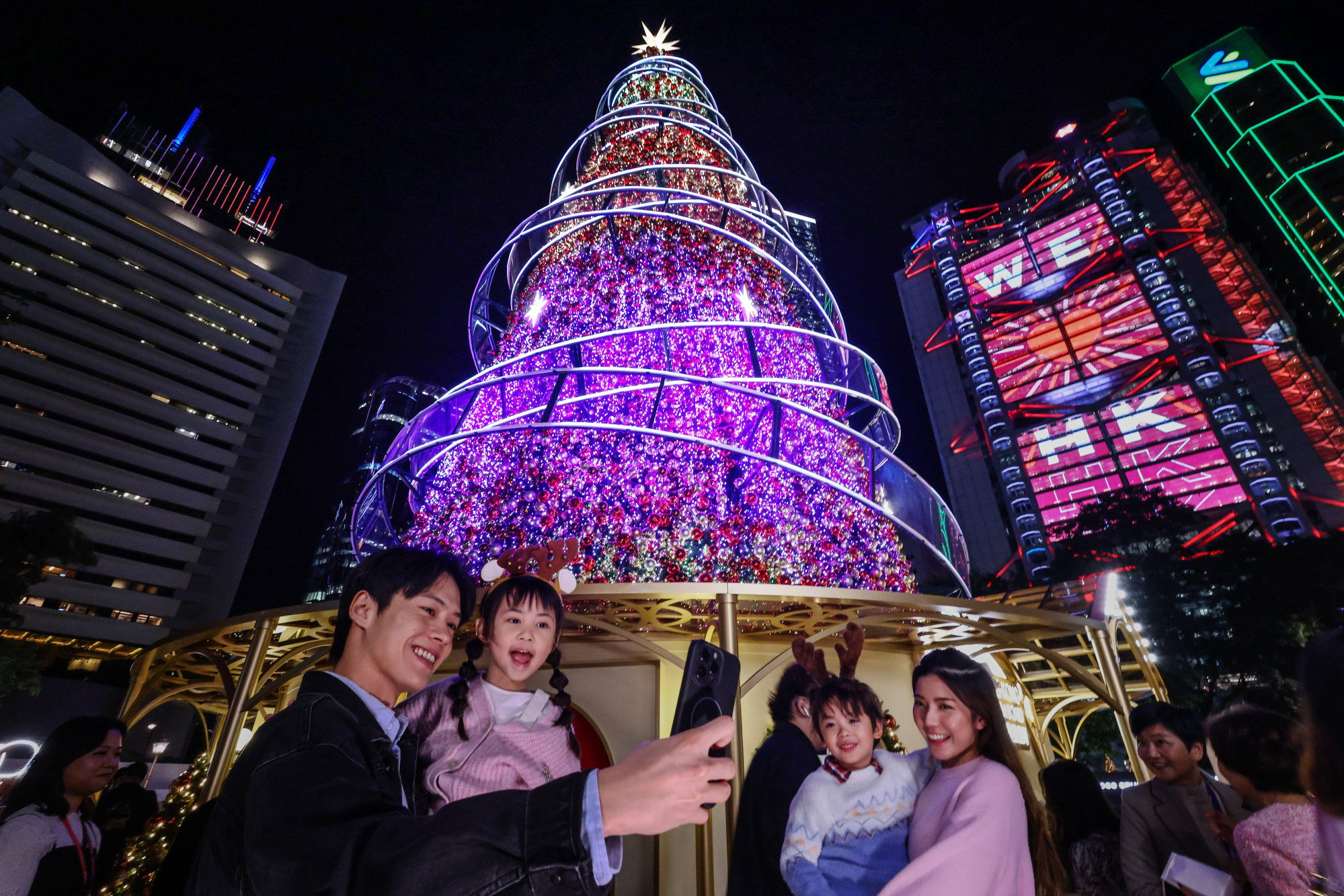
Today, an enormous tree towers over Central's Statue Square, lights spiralling around it in a technicolour helix. Beside it sits a row of idyllic cottages, their blueprints seemingly plucked from a chocolate box, while a stately station clock has sprouted behind the statue of Sir Thomas Jackson - a tableau designed for smartphones but still tethered to the hand-painted tungsten bulbs and polyfoam angels of Christmases past.


Comments
Post a Comment