The Weight of Conscience
A Legacy of Honor and Redemption
At the 1988 Seoul Olympics, Park Si-heon, a light-middleweight national representative, faced Roy Jones Jr., one of the most dominant boxers of his era. Reflecting on the match, Park admitted, “The level was different.” He recently rewatched the bout on YouTube, noting that while he defended well, there was an undeniable gap in skill. Despite this, the referee awarded him a 3-2 decision victory, raising his hand in celebration. However, Park could not smile. His expression was one of confusion and disbelief as he awkwardly embraced his opponent.
This match was later recognized by AFP as one of the five greatest Olympic judging controversies in history. The outcome left many questioning the fairness of the decision, especially given the disparity in skill between the two athletes.
The Aftermath and Personal Struggles
A 23-year-old rising star, Park retired immediately after the tournament. The public response was harsh, with many mocking him for supposedly "stealing" the victory. His retirement did not bring resolution. As he transitioned into coaching, he found it difficult to protest questionable judgments during matches. Social anxiety and intense emotional struggles followed him throughout his life.
Part of his personal tragedy was adapted into the film Count. The movie includes scenes where neighborhood children taunt his son, saying, “Your dad’s gold medal is fake.” These moments are based on real events. In the film, when the protagonist, played by Park, says, “I want to return the gold medal,” higher-ups scold him: “Is the Olympics a joke?”
A Reckoning After Three Decades
In September of last year, a short video surfaced on Roy Jones Jr.’s Instagram. It showed Park visiting Jones’ Florida training camp. Initially unaware of Park’s intentions, Jones soon began wiping tears from his face as Park presented him with the gold medal. “I’ve waited over 30 years to face you in the ring again,” Park said. “I know it was wrong, so I’m returning the gold medal.” Before the Korean words were translated, Jones broke into tears. He called it “a blessing from God,” but it was a matter of human will.
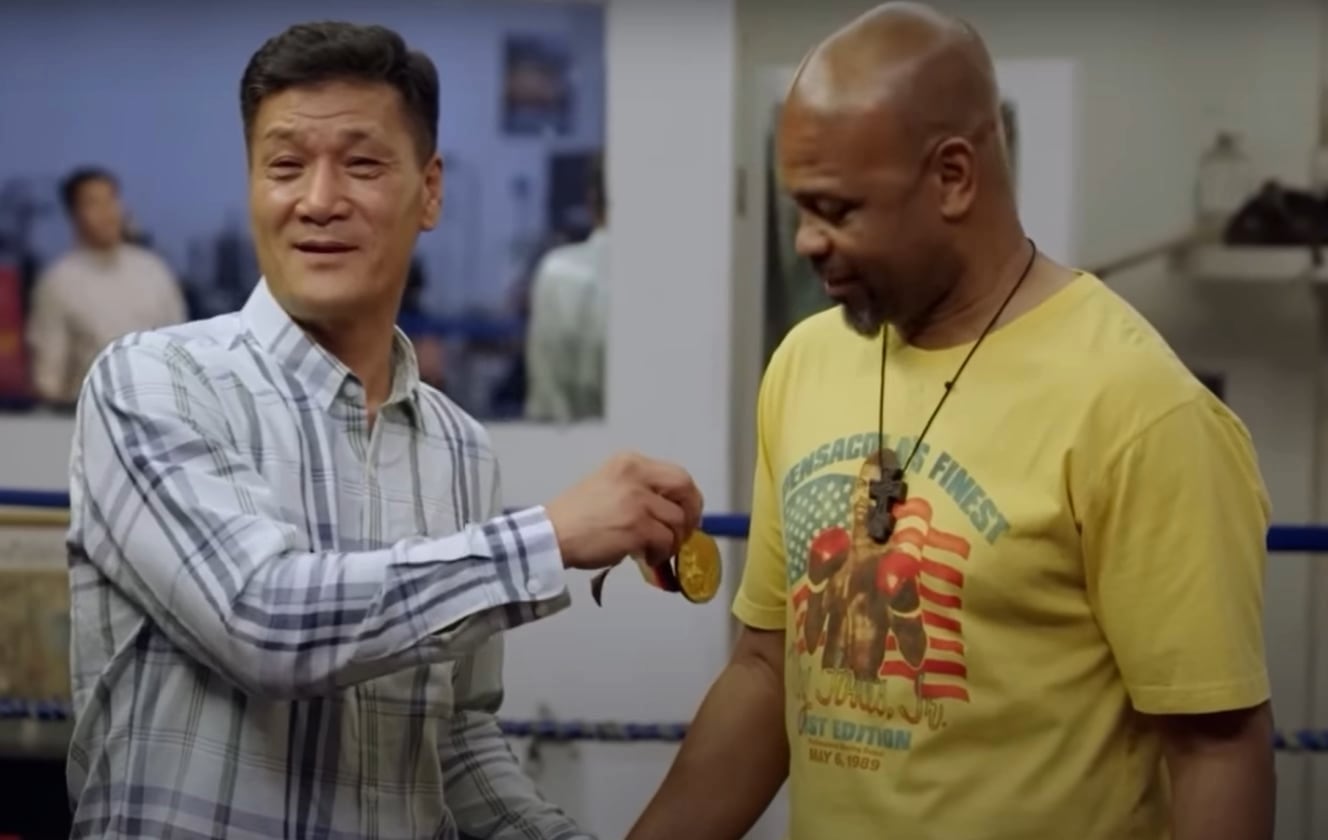
A Moment of Conscience
The meeting, which took place two years ago, might have remained unknown had Jones not shared it publicly. It was not a smart choice—some might even call it foolish. Park did not cheat. The International Olympic Committee (IOC) dismissed all allegations. While some might argue that the match had elements of home advantage, by today’s standards, Park could have silenced public opinion through legal action, citing false information or defamation. He could have countered with, “I’m also a victim.” Instead, he chose manhood.
Not deceiving oneself, humbly seeking forgiveness despite fighting tooth and nail, is the way of martial arts. In a world where people become ruthless just to win, discussing manhood seems meaningless. Yet, in a world where true men are disappearing, talking about manhood is more important than ever. Chattering about justice with a three-inch tongue is futile—because words alone won’t fix anything. Without the courage to give up everything to correct wrongs, fake fighters adorn themselves with undeserved gold and fight safe, clumsy battles today.
A New Chapter
Park’s gold medal remained Korea’s last Olympic boxing gold. Now, it no longer belongs to Korea. “I gave it back to its rightful owner,” he said. Reclaiming the throne will take time. What matters, however, is always the spirit. In the ring, they count to ten so that even the fallen can rise again. Turning one’s body in the right direction before the count ends, hurting as much from injustice as from defeat, and thus granting glory to wounds—this is the achievement Korea needs now. A resurgence will begin only then.


Comments
Post a Comment