Volcanic Eruption Linked to Black Death, Scientists Claim
The Chain of Events Leading to the Black Death
Volcanic eruptions may have triggered a series of events that brought the Black Death to Europe, according to new research. Tree ring data has revealed 14th-century volcanic activity as the 'first domino to fall' in a sequence that led to the devastating spread of bubonic plague. Researchers used climate data and documentary evidence to create the most complete picture yet of the 'perfect storm' that resulted in the deaths of tens of millions of people, along with significant economic, political, and cultural changes.
Their findings suggest that a volcanic eruption or cluster of eruptions around 1345 caused annual temperatures to drop for consecutive years due to the haze from volcanic ash and gases. This, in turn, led to crop failures across the Mediterranean region. To avoid riots or starvation, Italian city-states used their connections to trade with grain producers around the Black Sea. While this change in long-distance trade routes helped prevent famine, it also meant that ships carried the deadly bacterium responsible for the Black Death.
The study, conducted by researchers at Cambridge University and the Leibniz Institute for the History and Culture of Eastern Europe (GWZO) in Germany, is the first to obtain high-quality natural and historical data to directly link climate, agriculture, trade, and the origins of the plague.
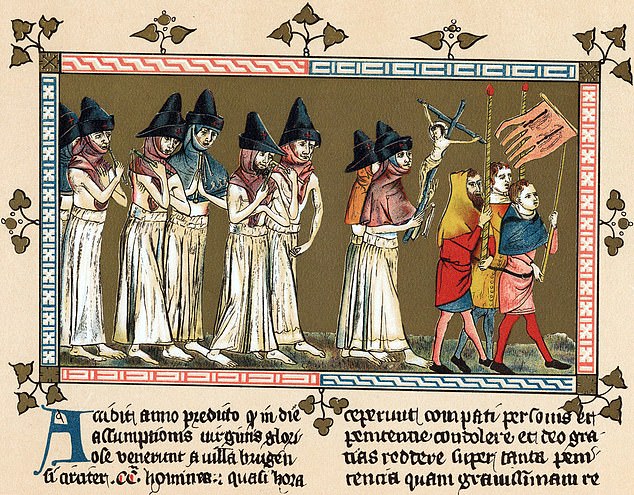
Between 1347 and 1353, the Black Plague killed millions of people across Europe, with mortality rates reaching nearly 60% in some areas. Although it is accepted that the disease was caused by the bacterium Yersinia pestis, which originated from wild rodents in central Asia and reached Europe via the Black Sea region, it remains unclear why the plague broke out when it did and how it spread so quickly.
Cambridge geography Professor Ulf Büntgen stated: 'This is something I've wanted to understand for a long time. What were the drivers of the onset and transmission of the Black Death, and how unusual were they? Why did it happen at this exact time and place in European history? It's such an interesting question, but it's one no one can answer alone.'
Professor Büntgen, whose research group uses information stored in tree rings to reconstruct past climate variability, worked with Dr Martin Bauch, a historian of medieval climate and epidemiology at GWZO, on the study published in the journal Communications Earth and Environment.
Dr Bauch said: 'We looked into the period before the Black Death with regard to food security systems and recurring famines, which was important to put the situation after 1345 in context. We wanted to look at the climate, environmental, and economic factors together, so we could more fully understand what triggered the onset of the second plague pandemic in Europe.'
The researchers combined climate data and written documentary evidence with conceptual reinterpretations of the connections between humans and climate to show a volcanic eruption—or series of eruptions—around 1345 was likely the first step in a sequence that led to the Black Death. They were able to approximate this eruption through information contained in tree rings from the Spanish Pyrenees in northern Spain.
Tree rings are layers of growth that form inside a tree's trunk each year, visible as circles, or 'rings,' when the trunk is cut in half. Scientists can discover what the climate was like during each year the tree has been growing there by studying the width, density, and chemical composition of each ring.
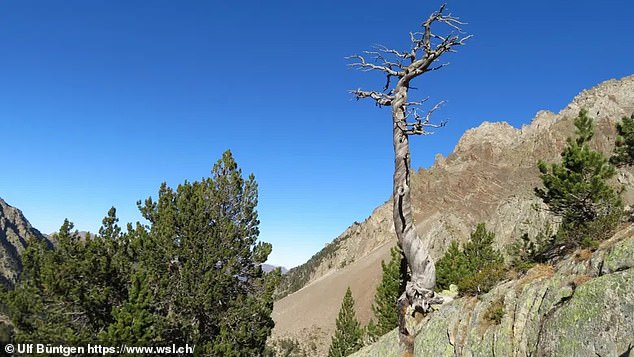
For example, wider rings indicate good conditions with adequate rainfall and moderate temperatures, whereas narrower rings point to stress from drought or cold temperatures. Consecutive 'Blue Rings' pointed to unusually cold and wet summers in 1345, 1346, and 1347 across much of southern Europe. While a single cold year is not uncommon, the researchers said consecutive cold summers are highly unusual. Documentary evidence from the same period noted unusual cloudiness and dark lunar eclipses, also suggesting volcanic activity.
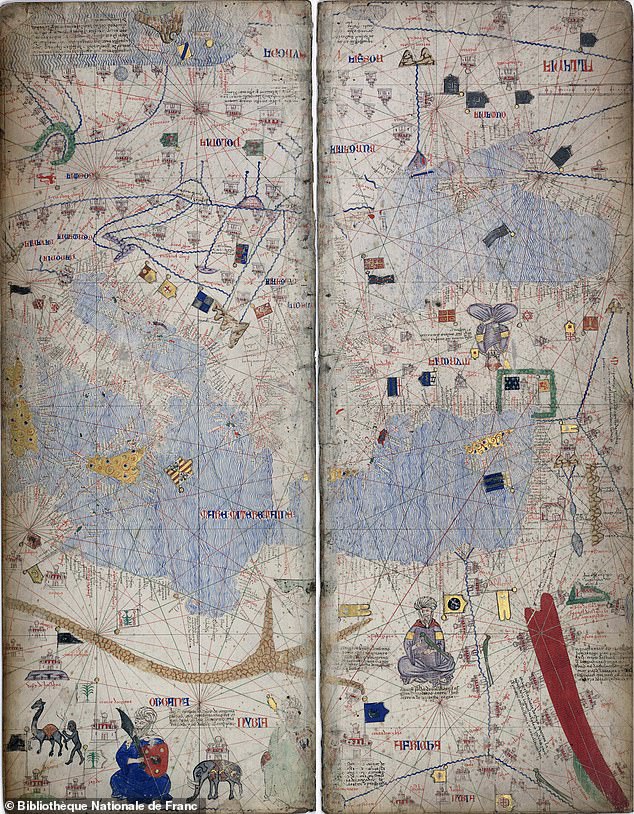
The volcanically forced climatic downturn led to poor harvests, crop failure, and famine. But the Italian maritime republics of Venice, Genoa, and Pisa were able to import grain from the Mongols of the Golden Horde around the Sea of Azov in 1347.
Dr Bauch said: 'For more than a century, these powerful Italian city states had established long-distance trade routes across the Mediterranean and the Black Sea, allowing them to activate a highly efficient system to prevent starvation. But ultimately, these would inadvertently lead to a far bigger catastrophe.'
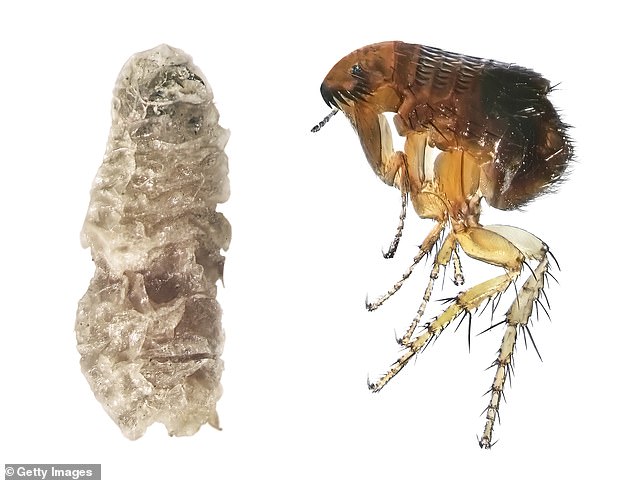
Previous research has suggested that ships carrying the grain likely also carried fleas infected with Yersinia pestis. Ancient DNA has suggested there may have been a natural reservoir of the deadly bacterium in wild gerbils somewhere in central Asia. Once the plague-infected fleas arrived in Mediterranean ports on grain ships, the researchers say they became a 'vector' for disease transmission, enabling the bacterium to jump from mammals to humans.
Professor Büntgen said: 'In so many European towns and cities you can find some evidence of the Black Death, almost 800 years later. Here in Cambridge, for instance, Corpus Christi College was founded by townspeople after the plague devastated the local community. There are similar examples across much of the continent.'
Dr Bauch said: 'We could also demonstrate that many Italian cities, even large ones like Milan and Rome, were most probably not affected by the Black Death, apparently because they did not need to import grain after 1345. The climate-famine-grain connection has potential for explaining other plague waves.'
The researchers say the 'perfect storm' of climate, agricultural, societal, and economic factors after 1345 that led to the Black Death can also be considered an early example of the consequences of globalization. Professor Büntgen said: 'Although the coincidence of factors that contributed to the Black Death seems rare, the probability of zoonotic diseases emerging under climate change and translating into pandemics is likely to increase in a globalised world. This is especially relevant given our recent experiences with Covid-19.'
The researchers say modern risk assessments should incorporate knowledge from historical examples of the interactions between climate, disease, and society.


Comments
Post a Comment