Foreigners Wear Ao Dai for Lunar New Year Celebration
The Rise of Ao Dai in Vietnamese Cities
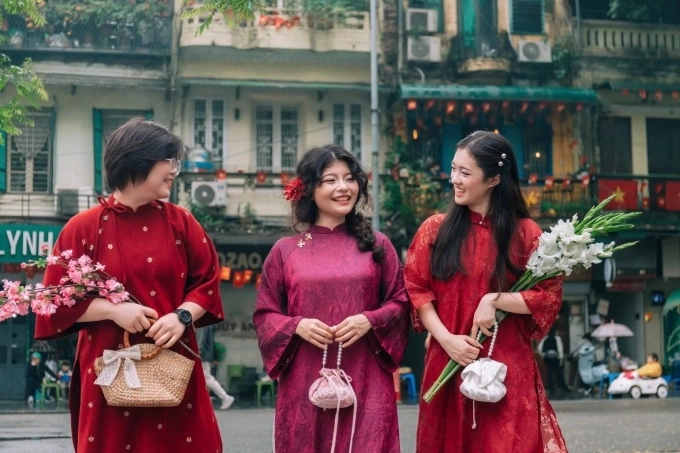
In recent years, a notable trend has emerged in Hanoi and Ho Chi Minh City as foreigners increasingly embrace the ao dai, Vietnam's traditional tunic, for spring outings ahead of the Lunar New Year. This cultural phenomenon is not just about fashion but also represents a deeper connection to Vietnamese heritage.
A Cultural Experience in Hanoi
Sian Nem, a 27-year-old Singaporean, recently spent nearly VND6 million (US$228) on an ao dai photo shoot around Hoan Kiem Lake and Hanoi's Old Quarter. Her return to Vietnam was largely driven by a social media trend encouraging visitors to try on the ao dai. She noted that seeing tourists share photos in ao dai made her realize that this outfit isn't exclusive to Vietnamese people.
"Seeing tourists everywhere share photos in ao dai, I realized this outfit isn't just for Vietnamese people," she says. "I wanted to transform into a Hanoi girl and immerse myself in the Tet atmosphere."
Sian and her friends booked a photographer and makeup artist two months in advance. She was surprised by the affordable rental prices, which ranged from VND150,000 to 350,000, calling it "extremely affordable" given the experience they had. At the pedestrian area around Hoan Kiem Lake, she was struck by the sight of thousands of Vietnamese women dressed in ao dai. Unlike in Singapore, where traditional attire is typically worn only on special occasions, the ao dai seems to be common in everyday settings in Vietnam.
"Vietnamese people truly cherish their heritage. This is the first time I've worn traditional clothing in such a casual and comfortable way."
A Unique Experience in Dong Xuan Market
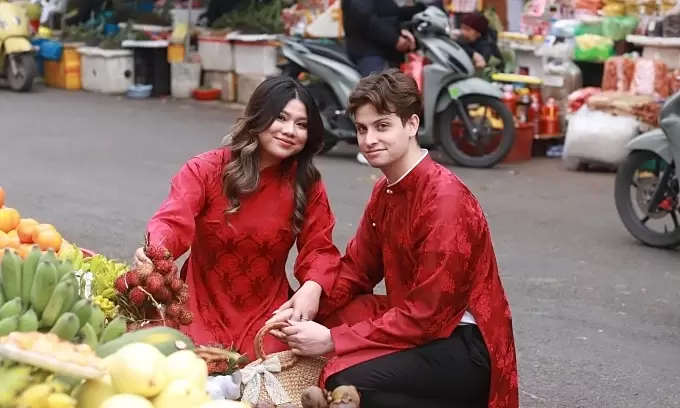
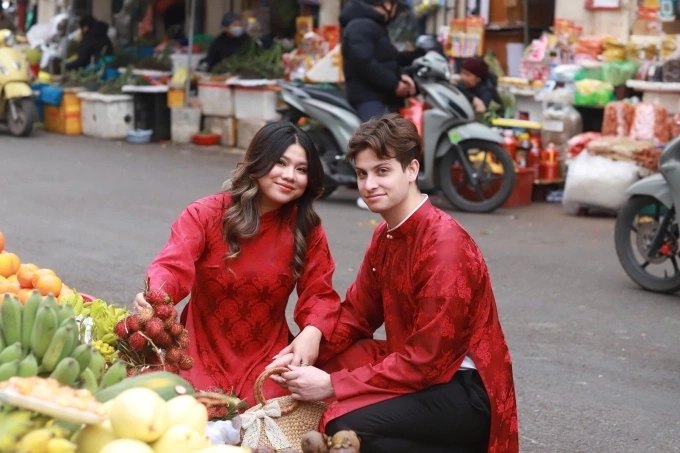
A few kilometers away at Dong Xuan Market, 23-year-old American Michael wore a bright red ao dai and carried a bouquet of gladiolus as he navigated the bustle in search of photo spots. After hearing from his Vietnamese girlfriend about the tradition of wearing bright colors for good luck during the Lunar New Year, he was eager to try it.
His appearance at Dong Xuan Market quickly drew attention, with vendors joking that he looked "like a Vietnamese son-in-law in ao dai," leaving him both embarrassed and amused.
"The ao dai felt like a magical passport, helping erase the distance between me and local people," he says.
Growing Demand for Ao Dai Rentals
On social media platforms, keywords such as "ao dai Viet Nam" and "Tet holiday in Viet Nam" have risen in searches, boosting demand for rental services. Linh Chi, owner of an ao dai rental shop on Nguyen Sieu Street in Hoan Kiem Ward, says she gets hundreds of international customers each month, mainly from Japan, Singapore, and the Philippines. To meet the demand, she has stocked more large-sized ao dai suitable for people weighing up to 120 kg and adjusted tailoring to better fit foreign physiques. The shop is also offering all-inclusive photography packages at heritage sites.
"We offer shoots at locations such as Dong Xuan Market, the Old Quarter and other historical sites," she says.
In Ho Chi Minh City, all five outlets run by Nhu Minh in Saigon Ward have reported a tenfold rise in foreign customers from Tet last year. Previously, western customers mainly rented ao dai for weddings when marrying Vietnamese partners. Now, they rent them simply to enjoy Tet. "We are scrambling to stitch more large-sizes ones," says Minh.
Cultural Exchange and Tourism Development
Nguyen Tien Dat, vice chairman of the Hanoi Tourism Association, describes the trend as a positive sign that Vietnam is strengthening its image as a cultural destination. He notes that social media trends and promotions by key opinion leaders have encouraged hands-on cultural experiences, contributing to getting more than 20 million foreign visitors in 2025.
Vietnam could learn from Japan and South Korea by standardizing traditional costume rental services and developing them into fully fledged tourism products, he says.
Personal Experiences and Reflections
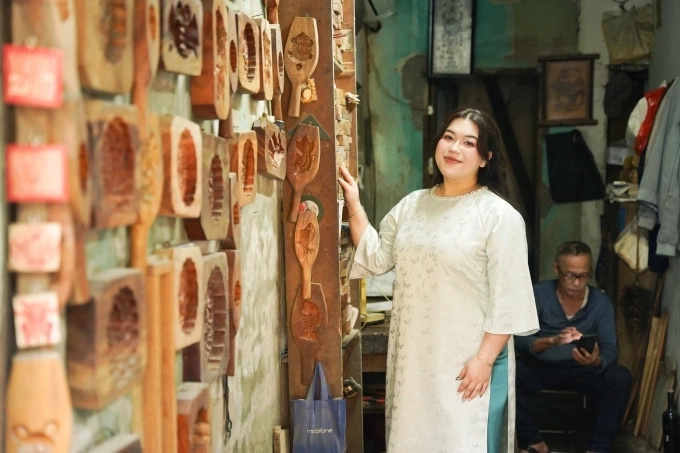
American Monica Niebrit, 26, avoided the crowds and chose a quieter approach, wearing an ao dai and visiting sidewalk tea stalls on Phan Huy Ich Street and a traditional cake mold workshop on Hang Quat Street. Sitting beside an old house and admiring peach blossoms, she says she felt the serenity of Tet.
"I love the culture here and hope that one day I’ll be able to live here permanently."


Comments
Post a Comment