Labubu's Three Bubble Burst Leaves Collectors Regretful
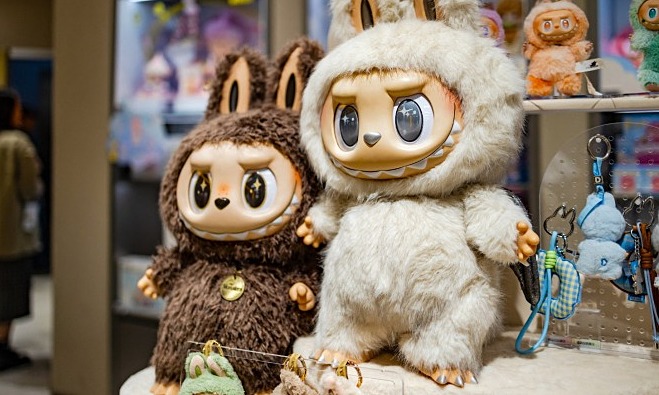
Bao Ngoc once spent VND850,000 (US$30) to acquire a rare “liquid eyes” Baby Three, a collectible plush toy. However, she now finds herself unable to sell it for more than VND100,000. The 24-year-old office worker in Thu Duc Ward, HCMC, recalls the disappointment she felt when collectors told her the model was out of style and only suitable for display. “I was devastated,” she said.
In late 2024, Ngoc invested over VND7 million to build a collection of more than 10 Baby Three figures. Initially, she intended to purchase a few as keepsakes, but after spending daily browsing online collector groups, she found herself caught in a shopping spiral driven by the fear of missing out. She described the thrill of unboxing and owning rare models priced between VND250,000 and VND900,000.
By early 2025, the frenzy around Labubu and Baby Three figures began to fade. Official products became widely available, reducing their scarcity. As the novelty wore off, Ngoc lost interest in acquiring new figures.
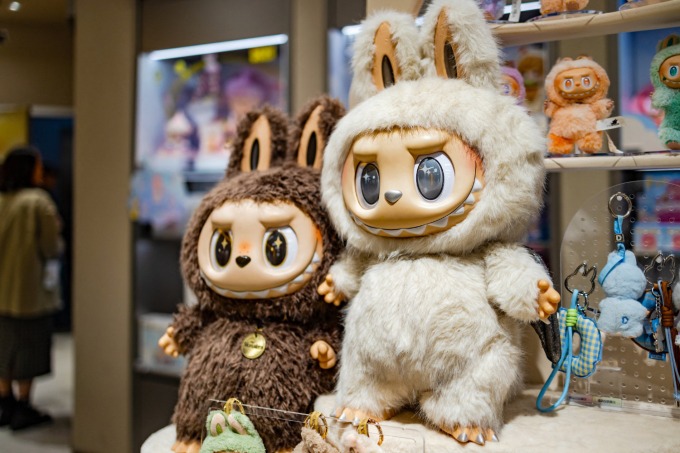
Pop Mart Labubu counter in Yangzhou, Jiangsu, China, on Oct. 30, 2025. Photo by NurPhoto via AFP
In July 2025, Ngoc decided to sell her collection after noticing them gathering dust on the shelf. At that point, the market had shifted dramatically. In Facebook groups dedicated to Labubu and Baby Three collectors, reselling posts made up over 90% of the content. “I realized many people were trying to sell off their collections, just like me,” she said.
Buyers were scarce, and rare models that once commanded high prices now drew little interest. “When I look back at how many Baby Three figures I bought and calculate the money I spent, I feel a deep sense of regret. If I had bought gold instead, everything might have been different,” Ngoc admitted.
The global art toy market is experiencing a significant downturn after a period of rapid growth. Bloomberg reported that by the end of 2025, secondary-market prices for major art toy lines such as Labubu and Baby Three had dropped by nearly 24% following new releases. Shares of Pop Mart, the owner of the Labubu brand, fell nearly 40% from their peak, resulting in a loss of US$11–13 billion in market value.
This decline has led to widespread buyer’s remorse among collectors. A survey conducted by VnExpress on online Labubu groups in Vietnam revealed that posts about selling items significantly outnumbered those seeking to buy. Vo Ngoc Hieu, a 30-year-old collector-turned-seller, noted that the market has been sluggish in recent months. He mentioned that the number of art toy buyers has fallen by half compared to the peak in late 2024.
“Models that were once ‘hot’ are no longer rare. Many people look at their collections and realize they bought on impulse and now only feel regret over the money spent,” Hieu said.
Duc Tien, a 31-year-old from Thu Duc Ward, HCMC, also stopped collecting Labubu in April 2025 after acquiring more than 80 figures. “My only regret is that I initially planned to buy two or three figures for fun but ended up buying too many,” he said. After spending tens of millions of dong, he now faces a dilemma—selling yields little while keeping the toys feels wasteful.

Duc Tien in Thu Duc Ward, Dec. 2025. Photo courtesy of Tien.
Phan Dung Khanh, Director of Investment Advisory at Maybank Investment Bank, explained that the cycle of rapid growth followed by a sharp decline is common in many consumer products. He cited past trends such as pearl yogurt and seven-level spicy noodles, which initially attracted strong online attention before losing popularity as interest faded.
When a trend wanes or a product is no longer scarce, buyer’s remorse can emerge. As prices continue to fall, financial pressure may push some individuals to cut their losses. Others, without financial stress, may realize their interest has waned or their living space is limited, leading them to stop collecting and sell off their items.
Khanh advises consumers to define their budget before following a trend to avoid negatively impacting their personal finances. “Consumers need to assess whether a product has long-term value or is only a short-lived trend and avoid spending due to herd mentality,” he said.


Comments
Post a Comment