Samsung Display Head Forecasts Foldable Growth Surge
The Future of the Display Industry
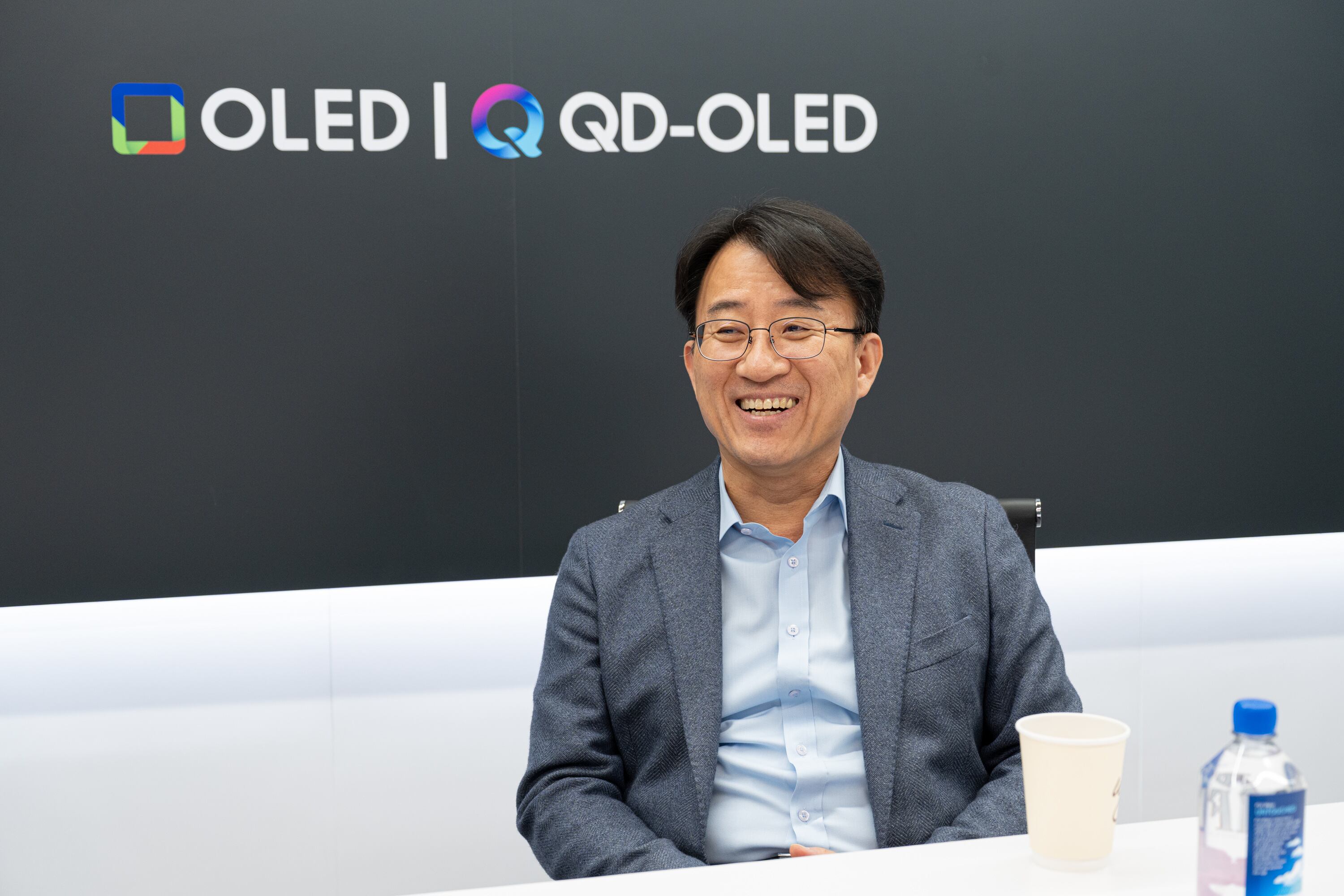
At the Las Vegas Convention Center in the U.S., Samsung Display President Yi Chung shared his vision for the future of the display industry. He emphasized that as robots and devices become more prevalent, the demand for displays will significantly increase. “We dream of capturing this entire market,” he said.
While many focus on robots and artificial intelligence (AI), there is a perception that the display industry may be shrinking. However, President Yi argued the opposite. At this year’s CES, Samsung Display set up a booth open to the public, showcasing concept products featuring small organic light-emitting diode (OLED) displays. These included smart keys, pendants, remote controls, automotive products, and smart glasses. By presenting these innovations, the company projected that the future display market could grow tenfold compared to current levels.
President Yi noted that visitors who initially approached the booth with skepticism often left smiling after experiencing the technology. “Clients who entered the booth with skeptical expressions seemed to relax after seeing our technology and products. By the time they left, they were smiling,” he said.
Samsung Display has long been a leader in small OLEDs for smartphones and foldable display technology. At CES, the company showcased a foldable display technology that significantly reduces creases, drawing considerable attention. President Yi highlighted that it has been seven years since foldable smartphones first appeared, and the market is led by Samsung Electronics. “Almost all clients who adopt foldable phones as a key strategic product use our displays. Expectations for foldables this year are extremely high,” he said.
Expanding Market Share and Legal Wins
Samsung Display recently won a patent dispute against Chinese company BOE, reinforcing its position in the global market. The company is also expanding its presence in the automotive OLED sector. President Yi stated, “High-end car manufacturers have started adopting Samsung Display’s automotive OLEDs. Although OLEDs still account for a small portion of the automotive display market, we hold a 70% market share.”
Despite its success, the Korean display industry faces fierce competition from Chinese rivals. While Korea has moved away from liquid crystal display (LCD) production due to falling behind China, it is rapidly catching up in OLEDs. However, President Yi pointed out that the technological gap between Korea and China in OLEDs remains significant. “Instead of competing in OLEDs where the gap exists, Chinese companies are aggressively investing in new displays like micro displays and OLEDoS to seize opportunities,” he said.
He added, “Some technologies require time to develop, but we face limitations due to regulations like the 52-hour workweek, which is regrettable. To widen the gap through focused development and investment, we need to overcome these constraints.” President Yi emphasized that for Korea to reclaim the top spot in the global display market, surpassing China, which leads in LCDs, tremendous effort is required. “We must strive to create new demand through innovative technologies,” he concluded.
Challenges in the Industry
The recent surge in memory semiconductor prices is also impacting the display industry. President Yi explained, “If TV manufacturers reduce production due to semiconductor shortages, display suppliers will inevitably see decreased orders. Semiconductors are the biggest variable for the display market this year.”
This challenge highlights the interconnected nature of the tech industry, where fluctuations in one area can ripple across others. As Samsung Display continues to innovate and expand its market share, it must navigate these complexities while maintaining its leadership in the ever-evolving display landscape.


Comments
Post a Comment