China's 'Little Nvidia' Targets Global Leadership After 468% Share Surge
Moore Threads, a graphics processing unit (GPU) developer that has been in operation for five years, is making waves in the artificial intelligence chip development space. Founded by Zhang Jianzhong, who previously served as Nvidia's China general manager from 2006 to 2020, the company aims to become one of the leading global players in this field.
Zhang emphasized that Moore Threads' GPUs, along with its own MUSA platform, are compatible with Nvidia's CUDA ecosystem. This compatibility makes it easier for Chinese users of Nvidia chips to transition to Moore Threads' solutions. Unlike Huawei Technologies, which has taken a different approach, Moore Threads is positioning itself as a viable alternative within the Chinese market.
During an interview published in the Shanghai Securities Journal, Zhang stated that the startup plans to introduce a new-generation chip each year to support China's AI development. He also highlighted the importance of policy support for strategic high-tech industries, calling it a "booster" for breakthroughs in the sector. If the domestic supply chain can support locally developed GPUs, it could enhance product quality and drive the core competitiveness of China's semiconductor industry.
The company's recent market debut saw its shares soar 468 per cent on the Shanghai stock exchange, reflecting strong investor interest. Despite having a current market capitalization of about US$40 billion—far less than Nvidia's US$4.5 trillion—Moore Threads is gaining recognition as a key player in Beijing's efforts to achieve AI tech self-sufficiency.
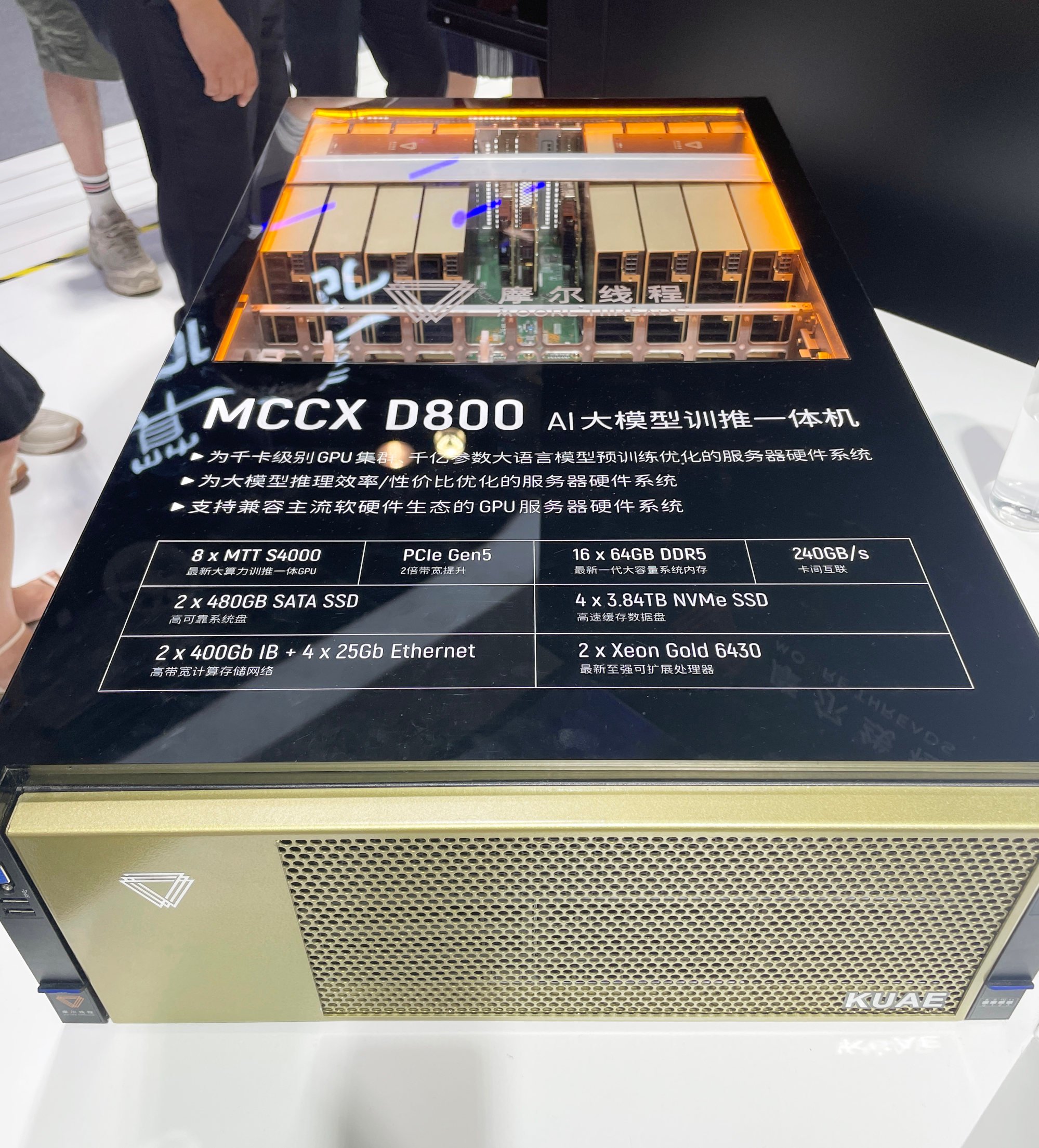
Zhang, who worked at Hewlett-Packard and Dell before joining Nvidia, mentioned that the funds raised from the Shanghai initial public offering (IPO) would be used to develop AI chips suitable for both training and inference. These chips, when combined with advanced memory systems, could form clusters of thousands or even tens of thousands of units.
The IPO on Shanghai's Star market was notable for its rapid approval process, which took only three months. This speed reflects Beijing's push to channel private capital into strategic sectors. Moore Threads reported generating 700 million yuan (US$99 million) in revenues during the first half of 2025, surpassing the total revenue from the previous three years. However, the company recorded a loss of 270 million yuan in the same period, though it expects to reach breakeven by 2027.
Moore Threads is not just focused on hardware; it is also investing heavily in software ecosystems. The MUSA platform is designed to work seamlessly with existing CUDA tools, providing a bridge for developers accustomed to Nvidia's environment. This strategic move could accelerate adoption among Chinese enterprises looking to reduce dependency on foreign technology.
The company's growth trajectory suggests that it is well-positioned to play a significant role in the evolving AI landscape. With continued investment and innovation, Moore Threads may emerge as a formidable competitor in the global GPU market.
As the demand for AI chips continues to rise, companies like Moore Threads are poised to benefit from the growing need for high-performance computing solutions. Their ability to integrate with established ecosystems while developing their own technologies could give them a competitive edge in the long run.
In addition to its technical advancements, Moore Threads is also navigating the complex regulatory and economic environment in China. The government's support for local tech development plays a crucial role in shaping the company's strategy and future prospects.
Overall, Moore Threads represents a unique blend of experience, innovation, and strategic positioning. As it continues to grow and evolve, it may well become a key player in the global AI chip industry.


Comments
Post a Comment