China's Small Manufacturers Chase the Automation Trend
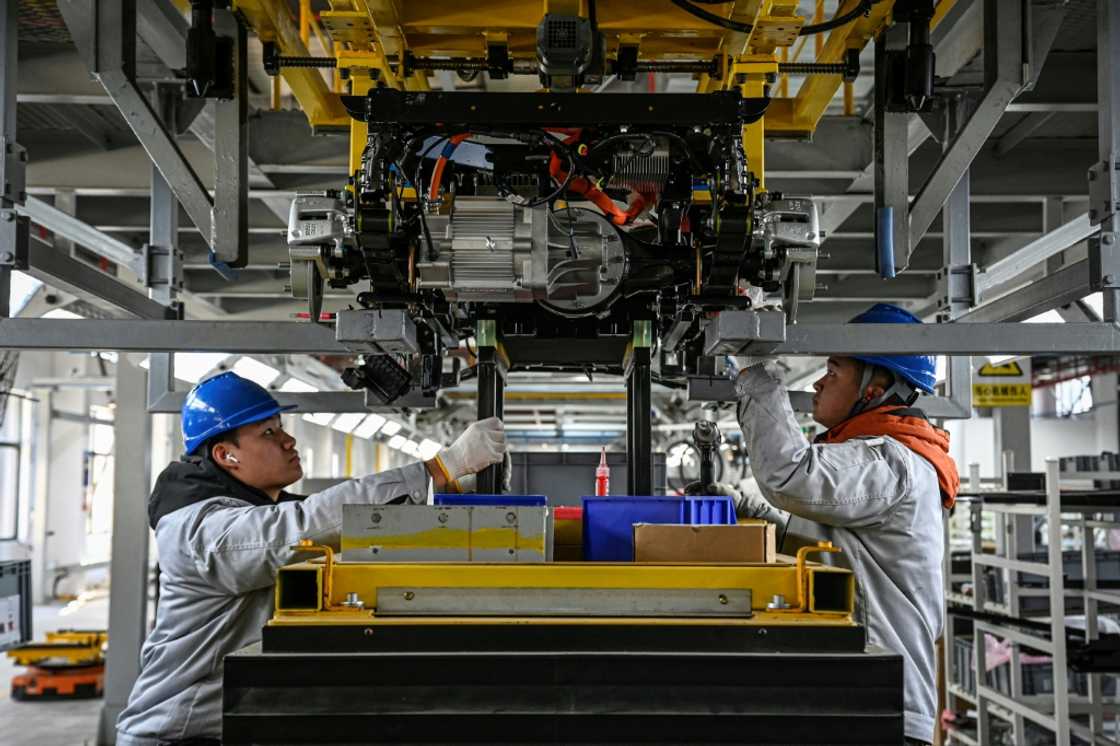
In a bright workshop located in eastern China, a robotic arm carefully maneuvered a partially assembled autonomous vehicle as workers fine-tuned its cameras. This scene reflects the gradual automation being embraced by even smaller factories across the world's largest manufacturing hub.
China has already established itself as the leading market for industrial robots, and the government is investing billions of dollars into robotics and artificial intelligence to strengthen its position in this sector. While fully automated factories are beginning to operate, the broader adoption of automation raises concerns about job losses and the challenges faced by small and medium-sized enterprises during the transition.
Experts and factory owners suggest that a hybrid approach is becoming the norm. At an autonomous vehicle workshop, manager Liu Jingyao explained that humans remain essential in even the most technologically advanced manufacturing processes.
"Many decisions require human judgment," said Liu, who leads Neolix, a company that produces small van-like vehicles used for parcel delivery in Chinese cities. "These decisions involve certain skill-based elements that still need to be handled by people."
At the Neolix factory, located 300 kilometers north of Shanghai, newly built driverless vehicles zoom around a testing track that simulates obstacles such as puddles and bridges.
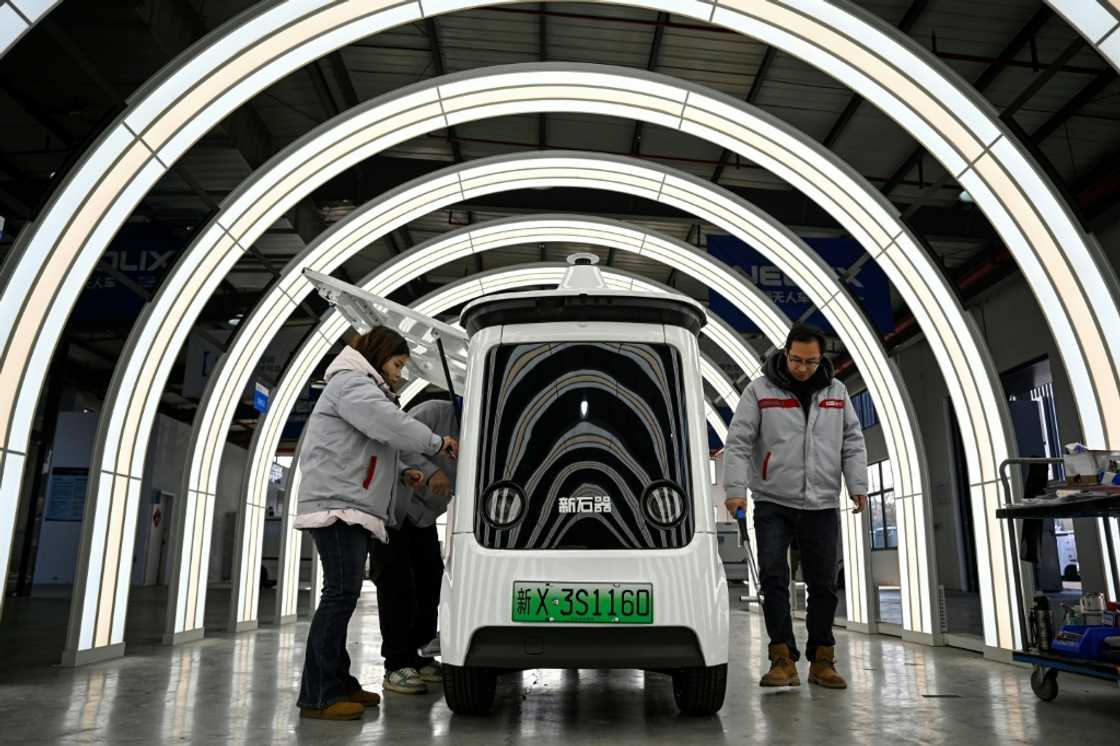
In a separate room, workers assemble the vehicles' "brains," testing their cameras and computer chips. Liu emphasized that automation serves more as a tool to assist humans rather than replace them.
"Automation primarily serves to assist humans, reducing labor intensity rather than replacing them," he said.
However, Ni Jun, a mechanical engineering expert at Shanghai's Jiaotong University, believes that China's focus on industrial applications for AI makes full automation feasible in many sectors. One example is Xiaomi, which operates a "dark factory" where no human presence is required, and robotic arms and sensors can manufacture smartphones without any human intervention.
Digital Divide
Ni highlighted a "digital divide" between larger companies with the resources to invest heavily in modernization and smaller businesses struggling to keep up. For instance, Zhu Yefeng's Far East Precision Printing Company, part of China's vast network of small independent factories, finds full automation a distant dream.
At the company, located just outside Shanghai, workers in small rooms feed sheets of instruction manuals into folding machines and operate equipment that prints labels for electronic devices.
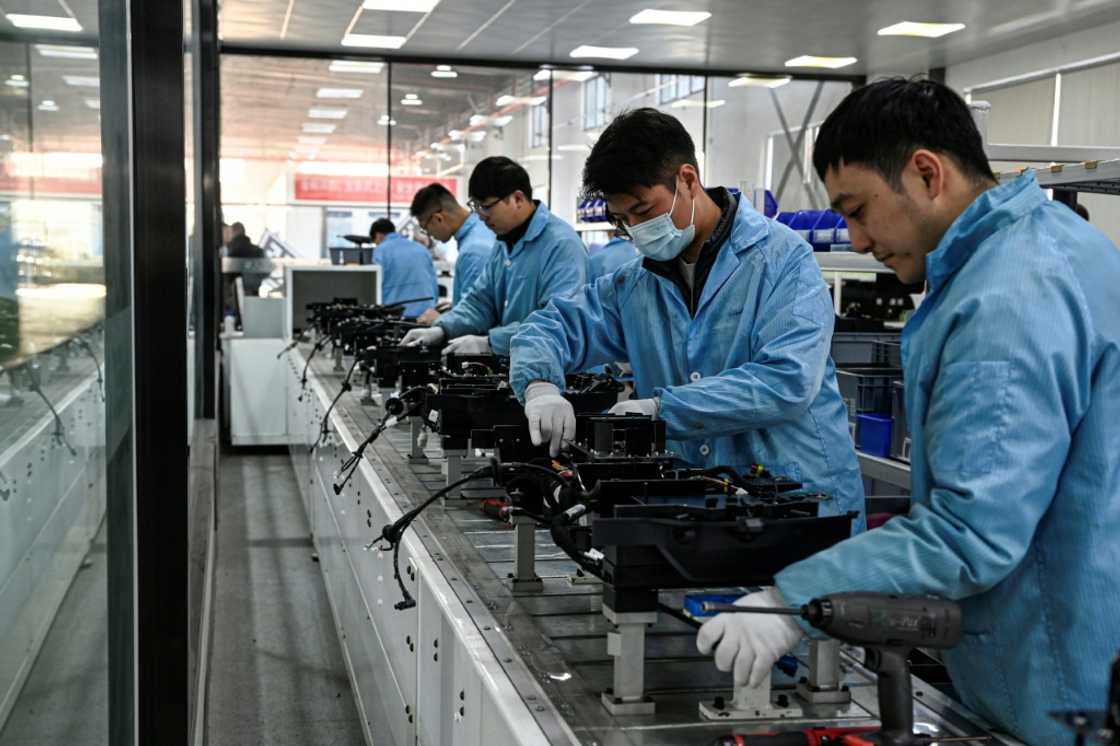
The company previously relied on pen and paper to track workflow, with managers running around the factory to communicate order information. "Things were, to put it bluntly, a complete mess," Zhu told AFP.
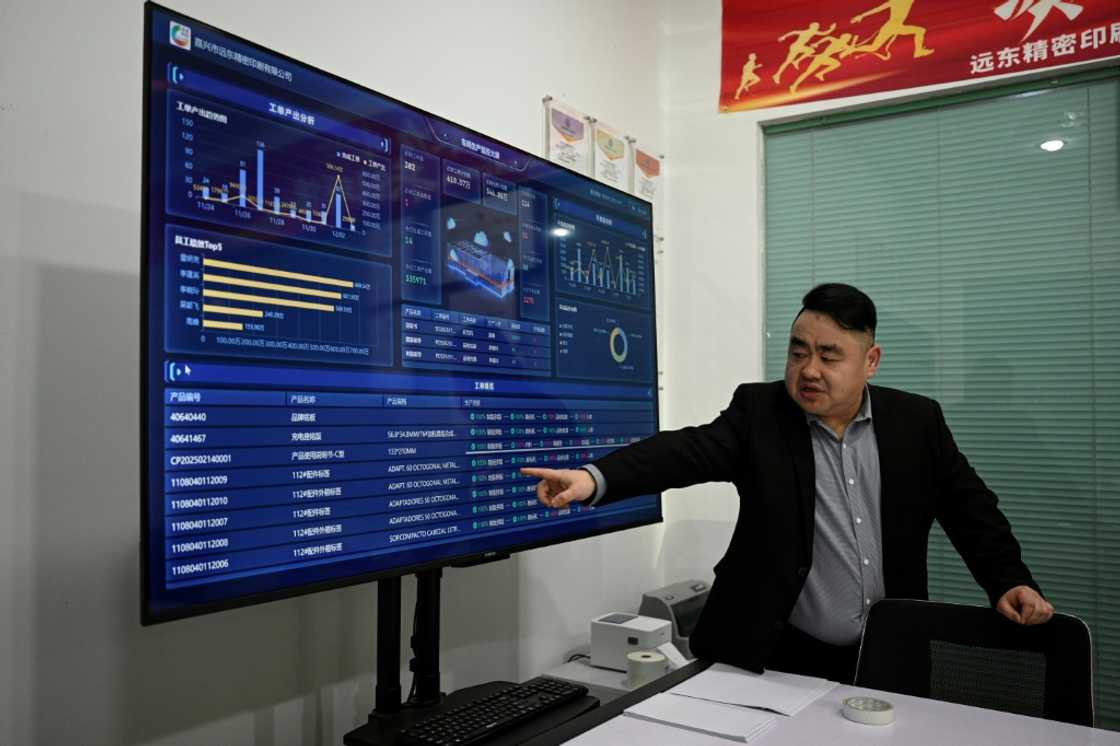
Since then, the company has adopted software that allows employees to scan QR codes, sending updates to a factory-wide tracker. In his office, Zhu can view detailed charts showing each order's progress and individual employees' productivity statistics.
"This is a start," Zhu said. "We will move toward more advanced technology like automation, in order to receive even bigger orders from clients."
Financial constraints remain a significant obstacle. "As a small company, we can't afford certain expenses," said Zhu. His team is working on developing its own robotic quality testing machine, but for now, humans continue to inspect final products.
Employment Pressures
The potential for widespread automation to cause unemployment is a challenge, according to Jacob Gunter from the Berlin-based Mercator Institute for China Studies. "Companies will be quite happy to decrease their headcount... but the government will not like that and will be under a lot of pressure to navigate this," Gunter told AFP.
Beijing's push to develop industrial robots will "intersect with the need for maintaining high employment at a time when employment pressure is considerable," he added.
Going forward, manufacturers must find a balance between technical feasibility, social responsibility, and business necessity, according to Ni from Jiaotong University. Zhou Yuxiang, CEO of Black Lake Technologies, the startup that provided the software for Zhu's factory, believes that factories will always be hybrid.
"If you ask every owner of a factory, is a dark factory the goal? No, that's just a superficial description," Zhou said. "The goal for factories is to optimize production, deliver things that their end customers want, and also make money."


Comments
Post a Comment