Chinese Physicists Challenge Einstein, Ending a Century-Old Debate
A Groundbreaking Experiment Recreates Einstein's Thought Experiment
For the first time, scientists in China have successfully recreated a thought experiment proposed by Albert Einstein nearly a century ago. This experiment demonstrates that the quantum world behaves in ways that the renowned physicist never fully accepted. The research was conducted by Pan Jianwei, often referred to as the "father of quantum" in China, and his team at the University of Science and Technology of China.
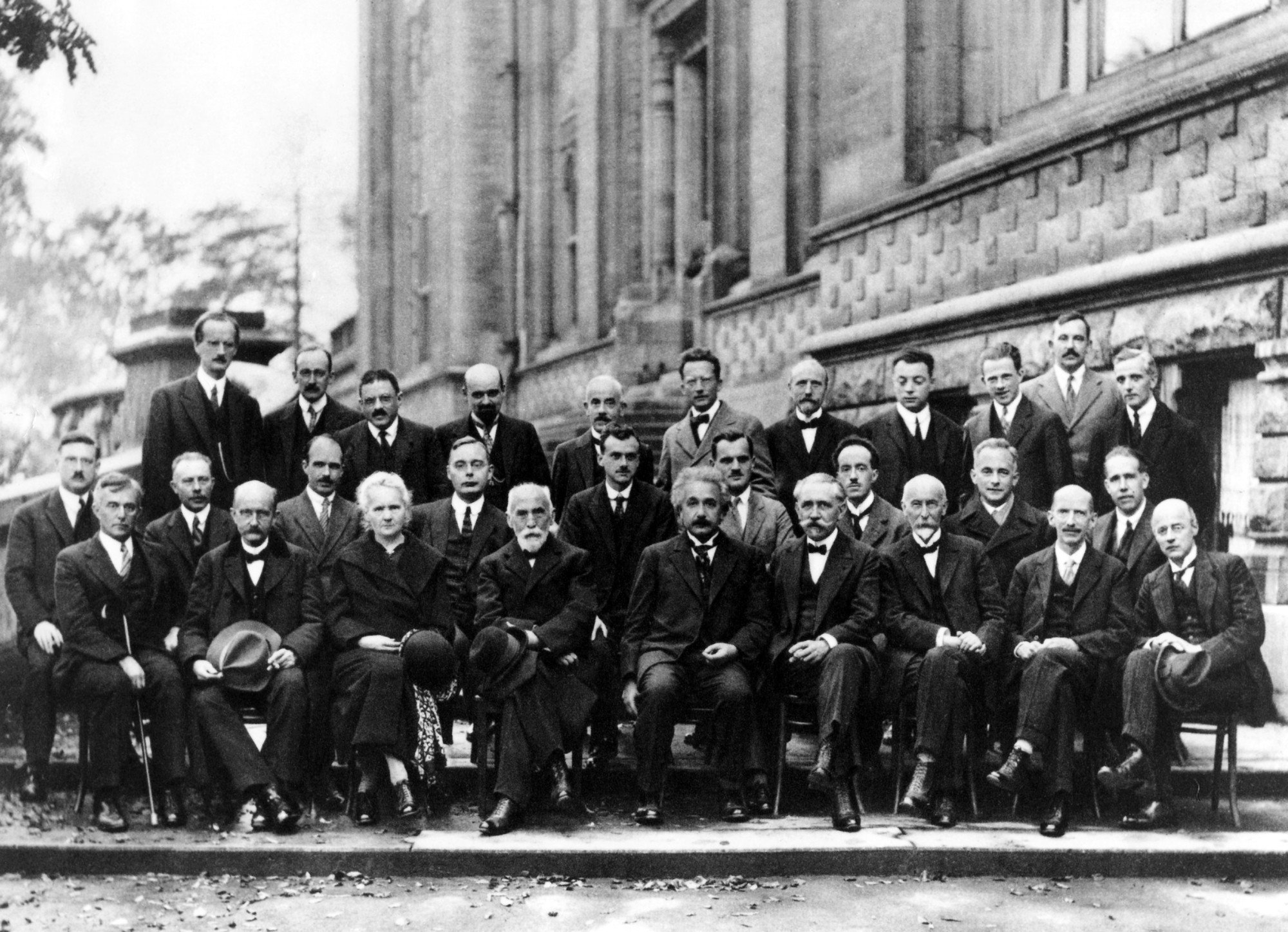
The experiment involved building a device sensitive enough to register the tiny push of a single photon. Einstein had previously outlined a modified version of the famous double-slit experiment during the 1927 Solvay Conference in Brussels. His goal was to disprove Niels Bohr's view that a particle's path and its wavelike interference pattern could not be observed simultaneously.
Bohr believed this limitation was not due to technical constraints but rather a fundamental rule of nature. Einstein, however, disagreed with this perspective. His idea was that it might be possible to observe both properties without disrupting the wave pattern.
In a paper published in Physical Review Letters, the researchers confirmed Bohr's theory that both properties cannot be observed at once. This principle defines the limits of human knowledge. The journal's reviewers praised the work as "a significant contribution to the foundations of quantum mechanics," calling it "beautiful" and "a textbook realisation of a century-old thought experiment."
In a press release from the university, Pan and his team described the dispute between Einstein and Bohr as "a defining moment in the early history of quantum mechanics."
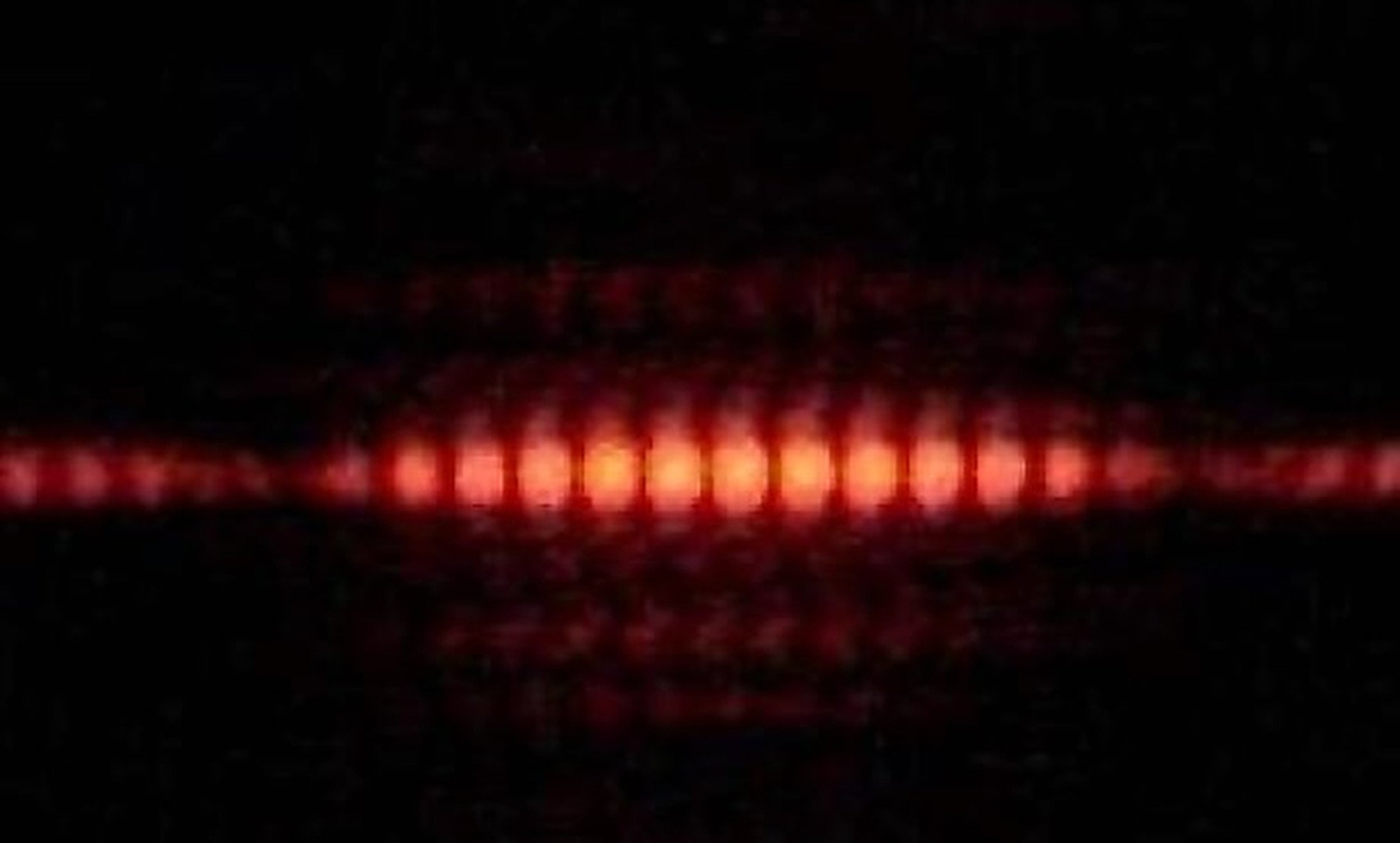
In quantum physics, particles such as photons can behave both as particles and waves. The double-slit experiment is the most famous demonstration of this paradox. When a single photon passes through two slits, it creates an interference pattern on a screen, as if it were a wave passing through both slits. However, if an observer tries to detect which slit the photon passed through, the pattern disappears, and the photon behaves like a particle again.
At the 1927 conference, Einstein proposed a clever way to prove Bohr wrong. He imagined placing a movable wall with two slits in front of the screen. If a photon passed through one slit, it would give the wall a tiny "kick" or recoil. In principle, measuring this kick could reveal which slit the photon used without interfering with the wave pattern.
While Einstein believed such a measurement could be made without destroying the interference, it remained untested for decades. A single photon delivers an incredibly small push—far too small for ordinary detectors to register without disrupting the experiment.
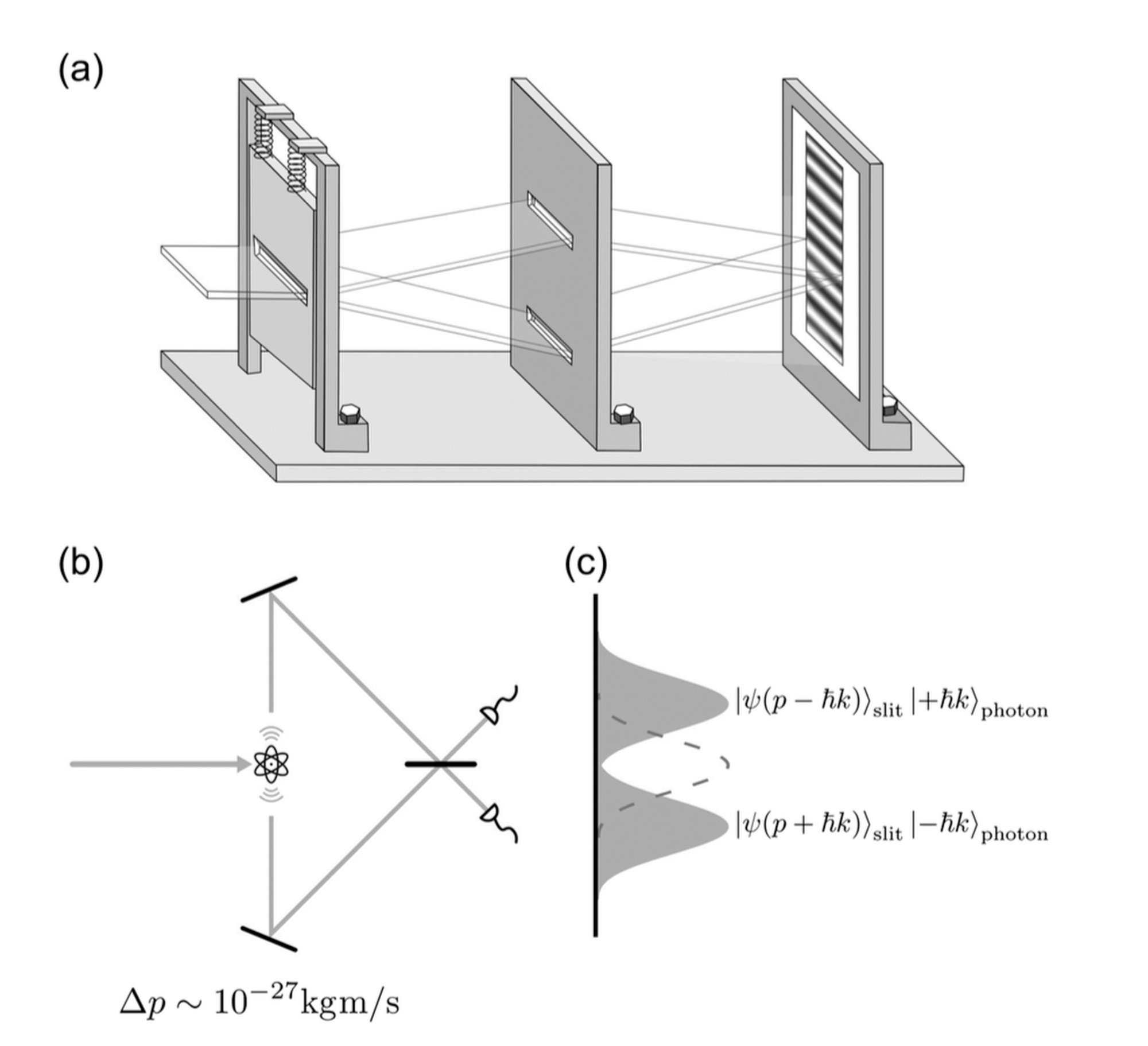
In their experiment, Pan's team used a single rubidium atom, cooled to near absolute zero and held in place with laser light, as the movable object in Einstein's proposal. The idea was that passing photons would give the atom a gentle nudge, which would vary depending on their direction and reveal each photon's path. The researchers adjusted how tightly the rubidium atom was held by the laser trap.
When the trap was loose, the atom moved slightly, revealing the photon's path—but the interference pattern vanished. When it was held tightly, the atom barely moved, the path remained unknown, and the interference pattern returned.
Just as Bohr predicted, observing one property had erased the other. While this was not the first experiment to confirm Bohr's principle, Pan's team has created an exceptionally precise setup.
An accompanying article published in the American Physical Society's free online magazine noted the researchers' setup had the potential to explore other less-established aspects of quantum mechanics. For example, the scientists could study how the effects of entanglement and decoherence interact, paving the way for better control of quantum systems and more reliable technologies.


Comments
Post a Comment