Flight Diverts Back to Dulles After Engine Malfunction
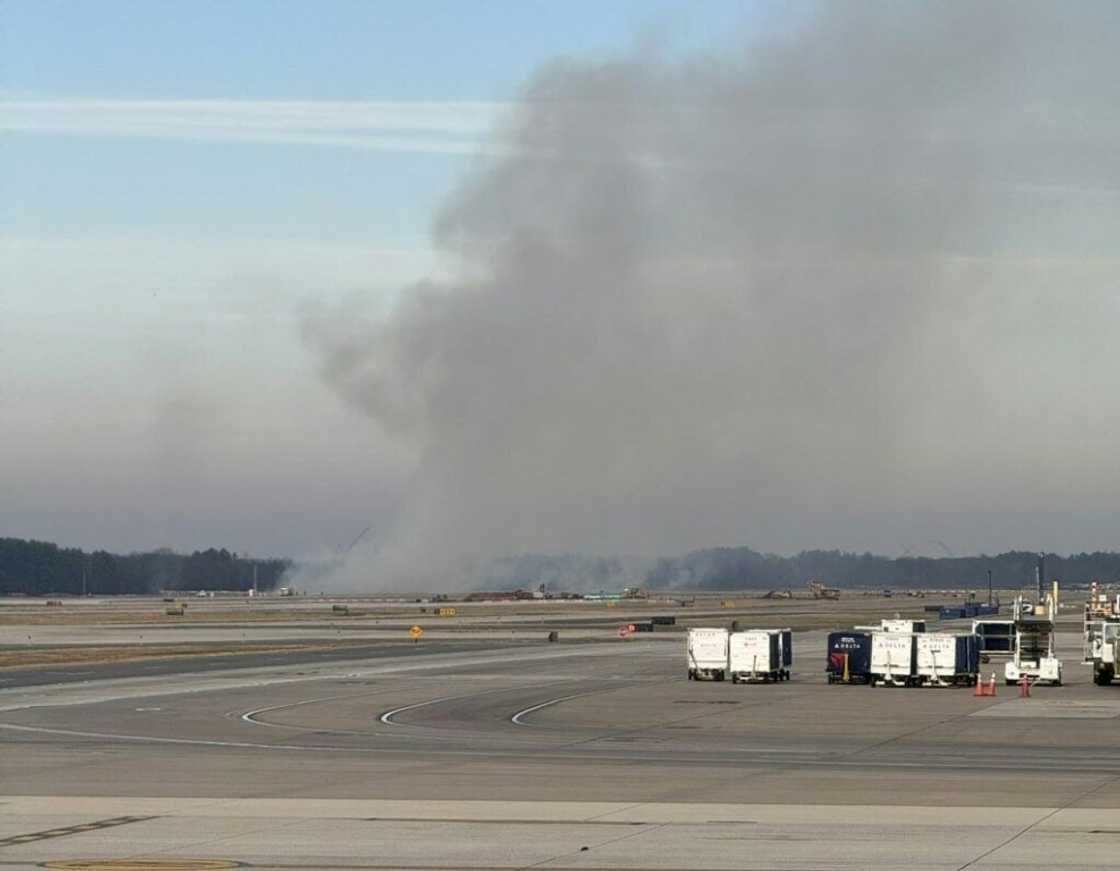
Emergency Landing and Brush Fire at Dulles International Airport
A United Airlines Boeing 777, en route to Tokyo, was forced to return to Washington's Dulles International Airport on Saturday after an engine failure and a brush fire near the runway. The incident occurred shortly after takeoff, but no injuries were reported among the 275 passengers and 15 crew members aboard the aircraft.
The plane, which was bound for Tokyo’s Haneda Airport, had to make an emergency landing following a power loss in one of its twin engines. As part of the safety protocol, the aircraft had to dump fuel before returning to the airport. This process is standard practice when an emergency landing is required, as it helps reduce the plane’s weight to ensure a safer touchdown.
"Shortly after takeoff, United Flight 803 returned to Washington Dulles and landed safely to address a power loss issue with one of its engines," said the airline in a statement. United Airlines later confirmed that they were arranging for the passengers to be rebooked on a different flight to Haneda, scheduled for later Saturday.
According to sources, the engine failure occurred around 12:20 pm (1720 GMT) as the 777-200ER was departing for Tokyo. The incident also led to a small brush fire near the runway, which was quickly extinguished by airport responders. The fire was sparked during the departure, and although it was contained, the affected runway had to be temporarily closed.
"United flight 803 ignited some brush around the runway as it was departing Dulles Airport. The fire was extinguished and the flight returned to Dulles, landing safely at about 1:30 pm, when it was checked by airport fire responders," said an airport spokesperson. Despite the closure, the spokesperson noted that Dulles has multiple runways, so other flight operations were not significantly impacted.
The US Federal Aviation Administration (FAA) confirmed that the aircraft turned back to Dulles due to an engine failure during departure. The agency stated it would conduct an investigation into the incident. Additionally, the National Transportation Safety Board (NTSB) said it was gathering information about the event.
Boeing, the manufacturer of the aircraft, referred all inquiries to United Airlines. However, reports from the aviation website AirLive suggested that one of the plane’s engines caught fire at the time of takeoff, causing flames to spread along the edge of the runway.
"Following the incident, the aircraft was observed maneuvering over the Fredericksburg (Virginia) area to dump fuel, a critical safety procedure used to reduce the plane's weight to a safe level before attempting an emergency landing," the website reported.
According to registration data provided by AirLive, the Boeing 777 involved in the incident was delivered in November 1998 to Continental Airlines, which was later acquired by United Airlines. The aircraft is equipped with two General Electric engines, now known as GE Aerospace.
Key Details of the Incident
- Flight: United Flight 803
- Aircraft: Boeing 777-200ER
- Departure: Washington Dulles International Airport
- Destination: Tokyo’s Haneda Airport
- Time of Incident: Around 12:20 pm (1720 GMT)
- Engine Failure: One of the twin engines experienced a power loss
- Brush Fire: Occurred near the runway during departure
- Fuel Dump: Performed over the Fredericksburg area to ensure a safe landing
- Passengers: 275 passengers and 15 crew members
- Injuries: None reported
Aftermath and Investigation
After landing, the aircraft was inspected by airport fire responders. The affected runway was temporarily closed, but other operations at Dulles continued without major disruptions. United Airlines is working to rebook passengers on a new flight to Tokyo.
The FAA and NTSB are conducting investigations into the cause of the engine failure and the brush fire. While no immediate risks were identified, such incidents highlight the importance of safety protocols and emergency procedures in aviation.


Comments
Post a Comment