Hanjin Airlines Launches Starlink Wi-Fi in South Korea
Introduction to Starlink in South Korean Airlines
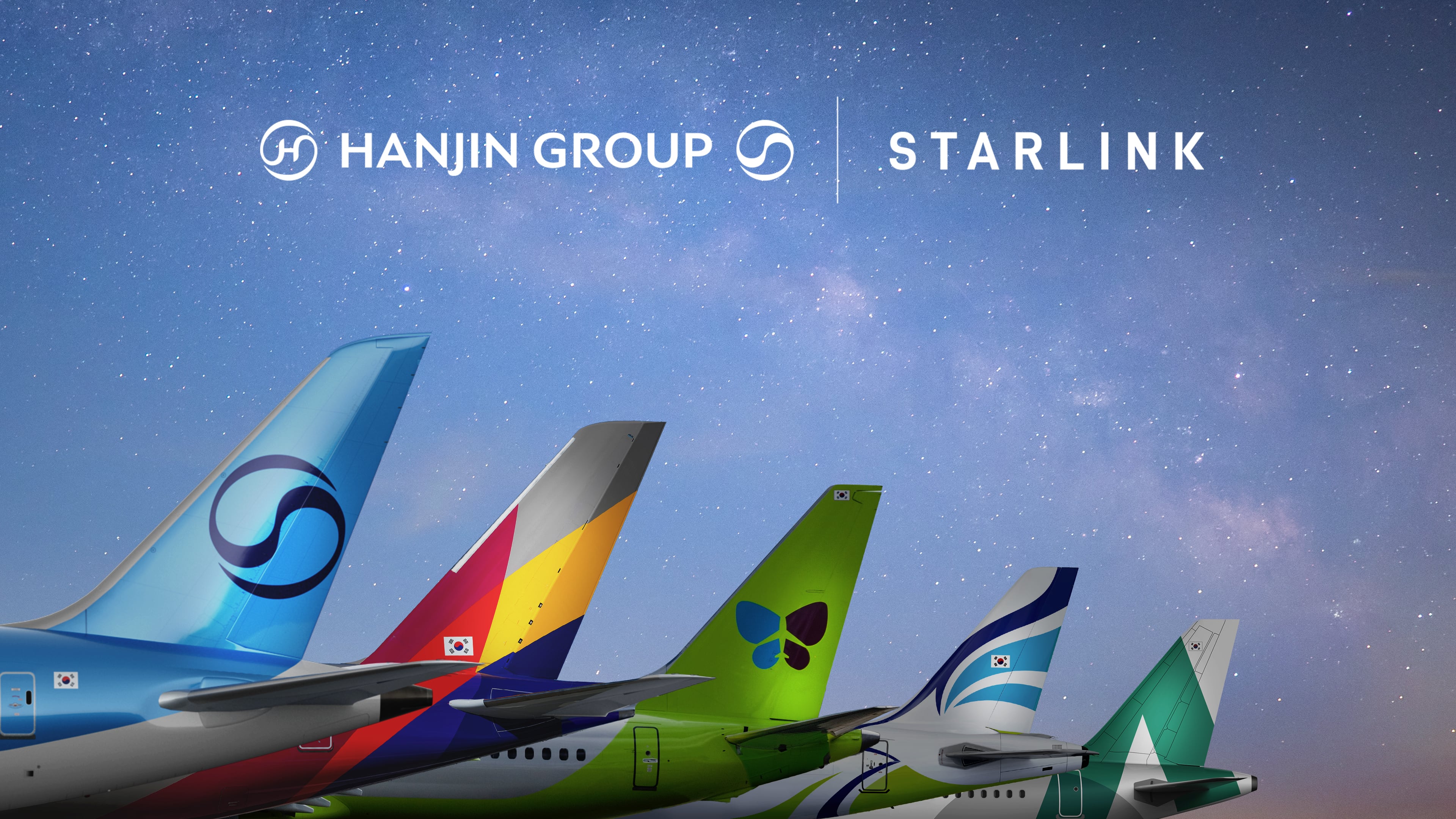
Korean Air, Asiana Airlines, Jin Air, Air Busan, and Air Seoul—five airlines under Hanjin Group—made a significant announcement on the 5th regarding their plans to introduce Starlink, a satellite internet service developed by SpaceX, as in-flight Wi-Fi. This move marks a first for South Korean airlines, as they will be the pioneers in adopting this advanced technology for in-flight internet services.
What is Starlink?
Starlink is a communication service that utilizes over 8,000 low-Earth orbit satellites, positioned at an altitude of approximately 550 km. The service was launched in South Korea on the 4th, offering internet access in areas where traditional cable communication is challenging. These include remote mountainous regions, at sea, and in the airspace where aircraft operate. This capability has led to a rapid expansion of its business scope.
Implementation Plan by Hanjin Group Airlines
The Hanjin Group airlines have outlined a plan to sequentially introduce Starlink-based services as early as the third quarter of 2026. This initiative will allow passengers to enjoy high-speed Wi-Fi regardless of their seat class. Korean Air and Asiana Airlines will initially apply the system to long-haul aircraft models such as the Boeing B777-300ER and Airbus A350-900. They aim to complete the rollout across all aircraft by the end of 2027. Meanwhile, Jin Air will start introducing the Starlink system with its B737-8 models, which previously offered in-flight Wi-Fi.
Advantages of Starlink Over Traditional In-Flight Wi-Fi
Many airlines currently provide in-flight Wi-Fi services, but most rely on geostationary satellites located approximately 36,000 km above the equator. For international flights, aircraft flying at around 10 km in altitude send signals to these satellites, which then connect to ground networks before relaying data back to the planes. This process often results in slow speeds. Additionally, multiple aircraft sharing a single satellite increases costs. Starlink, however, reduces expenses and enhances internet speeds. As a result, some airlines are transitioning to free in-flight internet services.
Examples of Airlines Adopting Starlink
In January, U.S. carrier United Airlines announced plans to introduce Starlink on all its aircraft and offer free access to mileage members. Similarly, Air France expanded its free in-flight internet services gradually after adopting Starlink in September of last year.
Current Policies of Hanjin Group Airlines
While Hanjin Group’s airlines currently charge for in-flight services, the group stated on the same day, “We are thoroughly reviewing service operations and policies, and detailed plans will be announced at a later date.” This indicates that the group is considering potential changes to their current pricing model as they integrate Starlink into their services.
Conclusion
The introduction of Starlink by Hanjin Group airlines represents a significant step forward in in-flight connectivity. With its ability to provide high-speed internet in previously difficult-to-reach areas, Starlink offers a promising solution for enhancing passenger experience. As more airlines adopt this technology, it is likely to become a standard feature in the aviation industry, transforming how passengers stay connected during their travels.


Comments
Post a Comment