Marian Chin: Feeding the World with Sarawak's Indigenous Flavors
A Culinary Journey Through Sarawak's Wild Flavors
Marian Chin, a scholar and researcher from Kuching, Malaysia, has dedicated her life to documenting the rich biodiversity of her homeland. Her work has now taken her beyond the borders of Sarawak, bringing the unique flavors of the East Malaysian state to Hong Kong for the first time.
"Come, I want you to have a look at my office," says Marian Chin as she steps into her kitchen and pantry in Kuching, Sarawak. Every shelf is lined with jars and bottles of herbs, spices, preserves, and other indigenous foods found only in the jungle of the East Malaysia state. These are not just ingredients; they are a testament to the deep-rooted culinary traditions of Sarawak.
Sarawak, located in the northwest of the island Borneo, is home to rainforests, rivers, jungles, and more than 30 ethnic groups, each with their own distinct dialects, cultures, and traditions in foraging for sustenance. Though Chin often knows of the ingredients found in Sarawak, each tribe might have a different name for them. "I had to research and rediscover a lot of it," she says.

Chin's findings aren't just academic. She has launched an event called Plating the Wild, collaborating with chefs to introduce ingredients and flavors—many of which had never been tasted outside Sarawak—to other regions of Malaysia and Asia.
Hong Kong gets its first taste of Plating the Wild at the Aberdeen Marina Club, from December 4 to 6, for member dinners. A separate dinner and talk, featuring Chin and Kuching chef Alexandros Ling, will take place on December 8 at Cafe 8, above the Maritime Museum in Central Pier.
Chin relishes the surprises that come from meeting people through her work. "I just spent a morning with a person who knows how to make Engkabang butter [a vegan fat made from vegetables and trees]," Chin says. "Usually it's a tribe native, but this guy is Chinese. His background is in [Chinese] medicine and he learned it from his master."
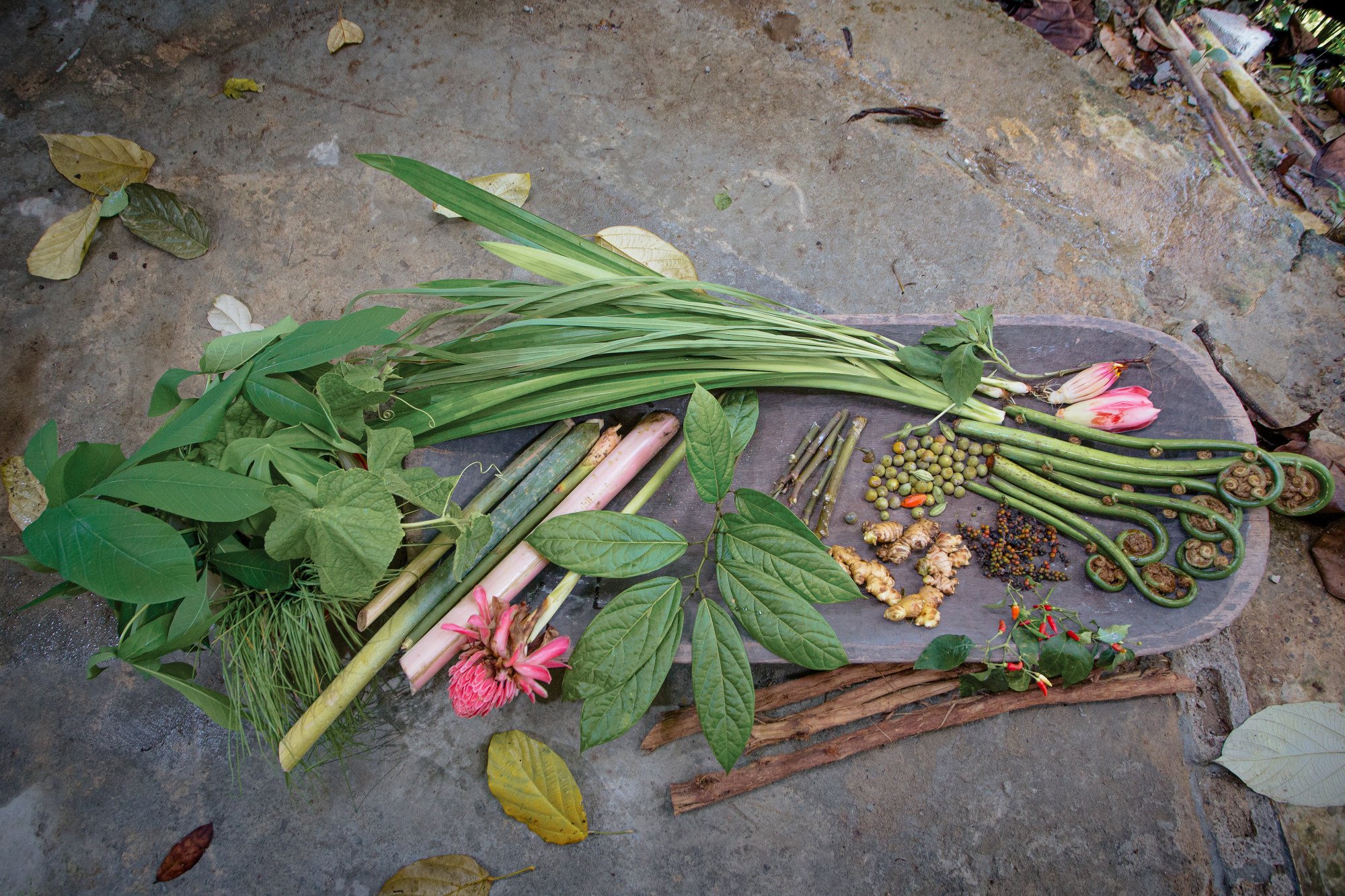
As a child, Chin loved exploring the forest behind where she lived in Kuching and collecting what she found. "I remember that was my favourite thing to do—running to the forest, finding a pitcher plant and even drinking from it," she says. "Before I could walk, I was already interested in smells—the smell of leaves, bark—and looking through a leaf and seeing light shine through it. I was considered kind of strange, but I was extremely sensitive about these things."
Her childhood play gave way to schooling overseas and life abroad in France, Britain, and America, but after 44 years away, Chin decided to return home to care for her elderly father. That's when nostalgia for the Borneo jungle, its culture, and foods, returned and became an adult obsession.
In 2012, she started a magazine, KINO (Kuching In and Out), that covers the state's unique cultures, activities, and resources. After that, under an umbrella enterprise called WhatMatters, Chin began other projects to revive and preserve Sarawak's unique and diverse heritage, tradition, and food. A report she helped prepare won Kuching a UNESCO City of Gastronomy designation in 2021.

"Our culinary identity must be preserved, so I would put it all in the magazine. It was like reclaiming something that I had forgotten," Chin says.
Next, she started doing food pop-ups. "Originally, I did not ask school-trained chefs. I asked jungle chefs, including grandmas and aunties of kampongs [Malay villages]," she says. "They were instinctive in their ability to know what is good, what to add, when to forage and all that."
Chin called the events heirloom dinners, and they did not always go off without a hitch. "On the first night, there was a complaint that the beef was very tough," she explains. For the Kayan tribe, it is customary to cut beef into cubes that can be chewed at length while tracking in the jungle. Though the texture was off-putting to an outsider, "that is part of their culinary identity," she adds.

The challenge for Chin is to maintain the authenticity of indigenous traditions while incorporating contemporary touches that help spread awareness and create an economic channel for the indigenous community. One venture she is experimenting with is putting traditional dishes, such as certain tribal recipes for chicken in bamboo, into cans to be distributed further afield in Southeast Asia.
For the Plating the Wild concept, Chin partners with contemporary chefs such as Ling, who runs his own Kuching eatery called Kyujin and has experience with restaurants in Shanghai and Singapore.
"I want Plating the Wild to be something different that will attract and hold attention," Chin says. "My wish is to have a new crop of chefs with this knowledge. I always tell them, the traditional dish is already perfect and it has lasted generations, so if you want to innovate, you have to do it without taking anything out."

Meanwhile, Chin's effort to catalogue Sarawak's culinary finds is far from complete, even if it doesn't always take her into the jungle. "To be honest, there is no point in my going physically into the jungle, because I would not know what and where to look," she says.
She also wouldn't want to take credit for knowledge that she knows does not originate with her. "If I go with a tribesman, then put my name on the document and writing, that would be an insult," she says. "The information is their strength, their knowledge passed down. All I do is research, collect, and document it with their name."
For Chin, "knowledge is everywhere." One time, a couple of cleaners spotted her holding some food she had foraged, and one of them began chatting with her about what it was called in her native language and how to prepare it—with prawn whiskers, the colloquial term for chayote tendrils, a thin reed-like vegetable. That was the only invitation Chin needed. "I said, 'OK, we meet tomorrow and bring whatever you need to show me.'" Afterward, Chin ended up writing six pages of notes for a story. "And I put her name on it," she says. "She was the one who got the information for me."


Comments
Post a Comment