Motional Robotaxi Offers Smooth Rides, No Motion Sickness
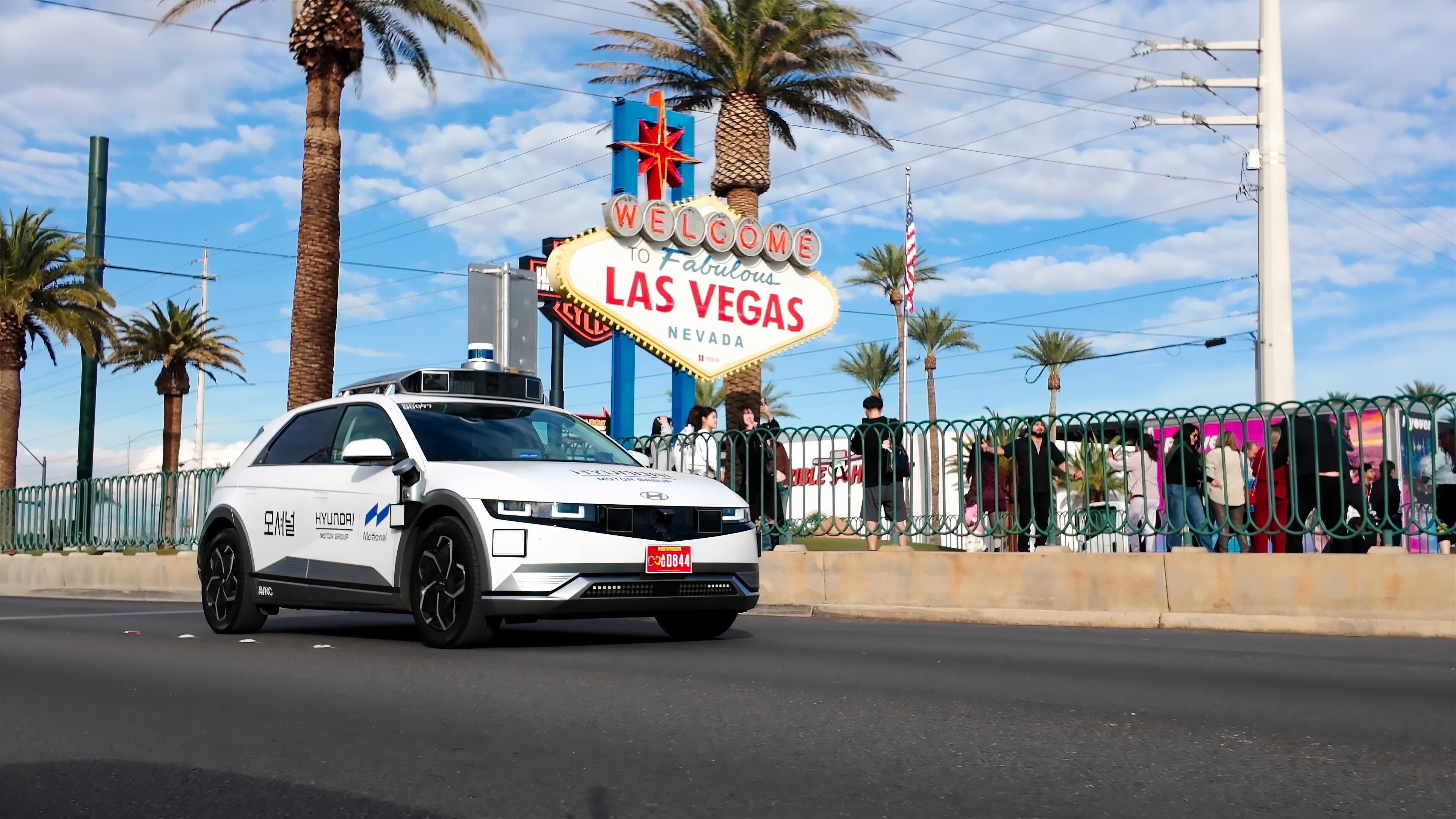
On the 8th, local time, near Harry Reid International Airport in Las Vegas, U.S., Motional, Hyundai Motor Group’s U.S. subsidiary specializing in autonomous driving technology, publicly unveiled its driverless robo-taxi technology to the press for the first time. The event took place at the Motional Technical Center. The atmosphere was heavy from the start, with a minimum temperature around 3 degrees Celsius, making it chilly. Local weather forecasts predicted light rain or graupel, and strong gusts of wind delayed the boarding by about an hour.
This mirrored the current situation in the autonomous driving market, where Hyundai Motor Group and Motional are facing stiff competition. Google’s Waymo, a leader in the field, has already begun commercial operations in major U.S. cities and announced plans to expand into global hubs like London and Tokyo by the end of this year. Baidu’s “Apollo Go” in China, backed by full government support, has secured vast data domestically and expanded into the Middle Eastern market.
The moment I boarded the “Ioniq 5 robotaxi,” custom-designed by Hyundai and equipped with software by Motional, I felt nervous. As a novice driver with a license but limited experience, combined with the robo-taxi’s pilot operation targeting commercialization by year-end, the combination was uneasy. Passenger No. 1 (the reporter) sat behind the driver’s seat, while Passenger No. 2, a veteran driver fatigued from business travel, sat beside them. During the pilot phase, a Motional engineer sat in the driver’s seat, but his hands rested on his thighs instead of the steering wheel.
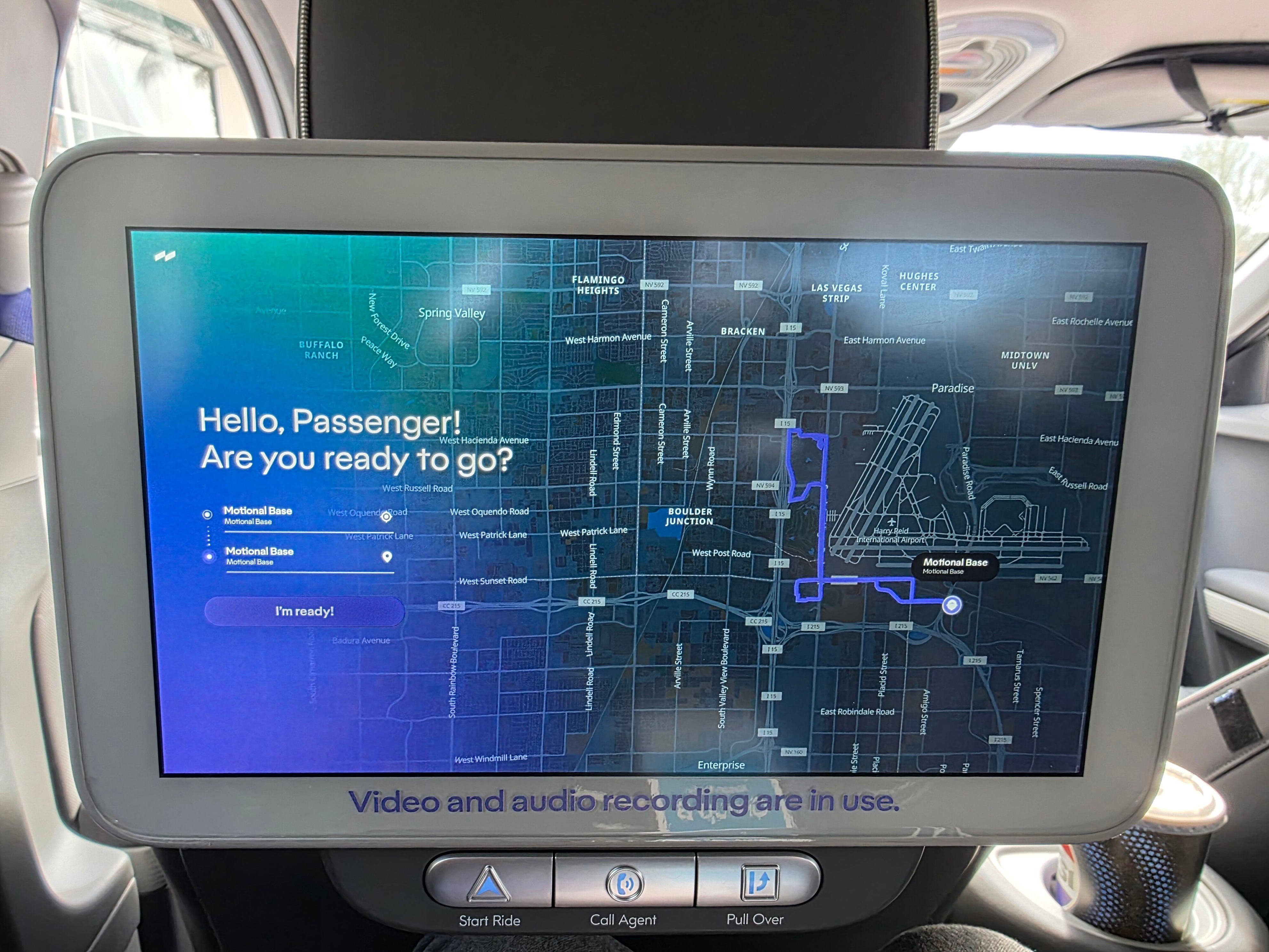
Upon boarding the back seat, each of the two passengers saw the day’s autonomous driving route displayed on screens in front of them. The round-trip course, approximately 40 minutes long, started from the Motional Technical Center, passed Townsquare, a large plaza-style shopping mall, entered the Las Vegas Strip, and returned after stopping at the Mandalay Bay Resort and Casino’s main gate.
I decided to empty my mind and evaluate (?) or rather, appreciate (?) the Motional robo-taxi’s driving from the perspective of a “novice driver.” Recalling my first overseas driving experience in the U.S. a few months ago, I compared who drove better. The anxious novice had memorized essential U.S. traffic laws through countless YouTube videos before driving there.
Counting to ‘Three’ at a STOP Sign?
After fastening the seatbelt and confirming the pre-entered route, pressing the “Start Driving” button on the screen made the vehicle depart smoothly. The first STOP sign appeared. The advice “Count to one, two, three in your mind before departing” after stopping at a stop sign in the U.S. flashed in my head. The vehicle came to a complete stop, and after about three seconds—counting “one, two, three” internally—it naturally started moving again. I felt relieved for the first time, thinking, “At least I won’t get a ticket for violating the stop line today.”
Instead, this vehicle, which seemed to meticulously follow traffic laws, was accustomed to “maintaining a steady speed.” It didn’t speed but was often overtaken. There was no sign of occasionally increasing speed to avoid disrupting traffic flow. However, the “jerky movements” and “motion sickness” often felt in electric taxis in South Korea were less pronounced. The vehicle accelerated and decelerated naturally throughout the ride, with no sudden acceleration or braking.
Humans Can Pop Out Anytime
The large plaza-style shopping mall, Townsquare, on the way from the airport to downtown Las Vegas, was a complex driving environment. Similar to an outlet mall near Seoul, it had many pedestrians, crosswalks, and required low-speed driving. Though few shoppers were present in the morning, the road wasn’t wide, and large flowerpots between the parking lot and walkway obstructed visibility. The vehicle naturally reduced speed.
Impressive was the vehicle’s external object recognition technology. A pedestrian walking in the same direction as the vehicle suddenly turned opposite, facing the car. The display screen in front of the rear seats reflected this movement almost in real-time. Additionally, a person pulling a large trash cart was accurately recognized. Inside the vehicle, only part of the person’s head was visible behind the large trash bin, but the display depicted their entire body precisely.
The most tense moment was passing a metallic object on the road. I thought, “Shouldn’t it avoid that?” but the vehicle didn’t make any abrupt maneuvers and drove past it. A human driver might have swiftly turned the steering wheel to avoid it. Inside, the vehicle passed with only a narrow margin that didn’t touch the body or wheels. Entering the Las Vegas Strip, traffic density increased rapidly. Before entering a 35-mile-per-hour zone, the vehicle gradually decelerated. It slowed to under 10 miles per hour before crossing a speed bump.
Navigating Blocked Lanes Like a Veteran
The most challenging section was an intersection where construction vehicles blocked the lanes. While waiting at a traffic light, the right two lanes in the intended direction were blocked by construction vehicles. The Motional robo-taxi needed to change to the left lane while passing through the intersection on a green light. When the light turned, the vehicle didn’t hesitate. It read the intersection flow and merged into the left lane in one smooth move.
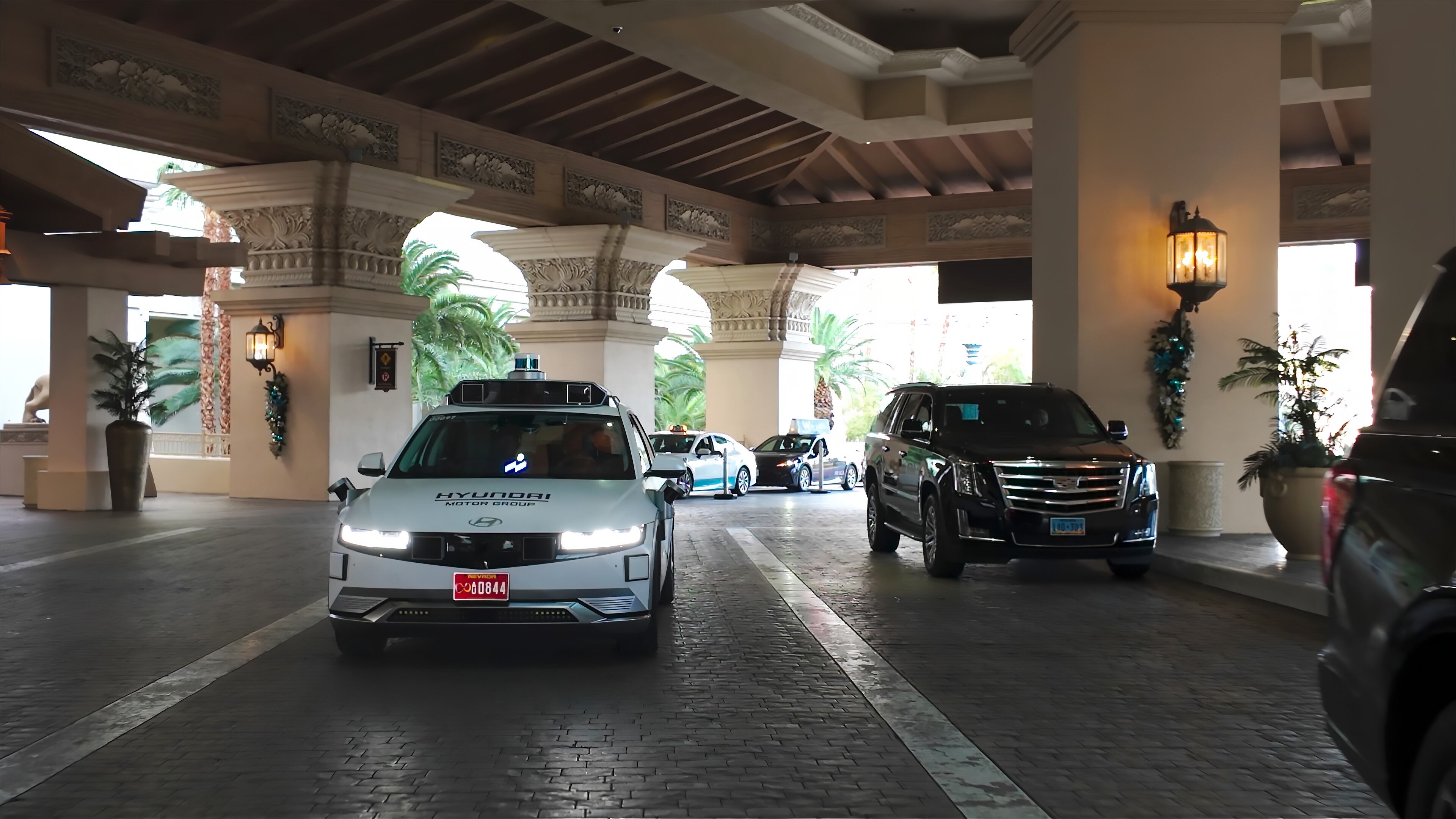
After completing the 40-minute ride and returning to the technical center, one thought remained: “This vehicle isn’t fast, but it’s not inconvenient and doesn’t make mistakes.” The weather, which had been cloudy in the morning, had slightly cleared. The technology Motional unveiled that day wasn’t overwhelming compared to competitors but presented clear results.
Motional’s autonomous driving wasn’t flashy but felt “everyday.” However, the day’s drive seemed partly due to Las Vegas’s relatively “easy” driving environment. Compared to Seoul or Busan, there was no severe traffic congestion, and no impatient, angry drivers. Throughout the 40 minutes, other vehicles honked only once. The basic score was a pass, but its true capability needed reevaluation in harsher conditions.


Comments
Post a Comment